Common Types of Door Locks Used in Homes
- Texas Premier Locksmith
- Serving All of Texas
Licensed, bonded & insured
TX License #B17236
Mobile service across Texas
Mon to Sat, 7am to 10pm
You are standing in the hardware aisle, or scrolling a product page at midnight, and forty locks are staring back at you. There are deadbolts, keypads, smart locks, and something with a fingerprint reader, and they all promise to keep you safe without ever explaining which one belongs on your door.
This guide walks through the common types of locks used in homes, what each one is actually built for, and where it fits. Some protect an entry door, some are meant only for an interior room, and a few have quietly changed what a house key even means. By the end you will know which type suits each door you own.
In This Article
What We Cover
- What really separates one lock from another
- Deadbolts: the workhorse of your exterior doors
- Knob and lever locks: made for inside, not the front line
- Mortise locks: the heavy option in older and higher-end homes
- Smart locks: your phone becomes the key
- Keypad and keyless deadbolts: a code instead of a key
What really separates one lock from another
Walk down the lock aisle and everything looks like it is competing on security, but that is only part of the story. Almost every lock in a home is balancing three things at once, and the reason there are so many types is that each one leans harder on a different one:
- Security: how well it stands up to force, prying, and someone trying to get past it, which depends far more on the type and the grade than on the finish or the price on the box.
- Convenience: how easy it is to live with every day, whether that means a key in your pocket, a code you tap in, or a door that unlocks as you walk up with your phone.
- Control: who is able to get in and how fast you can change that, whether that means rekeying a lock so an old key stops working or deleting a code the moment a houseguest leaves.
Once you know which of the three matters most for a given door, the right type almost picks itself. A front entry leans on security, a side door the whole family uses leans on convenience, and a home with people always coming and going leans on control. Keep those three in mind as we walk through the types below.
Deadbolts: the workhorse of your exterior doors
When people picture a lock that actually secures a door, they are picturing a deadbolt. It throws a solid metal bolt into the door frame, and unlike a spring latch it does not push back open under pressure. This is the lock that carries your front and back doors.
Almost every deadbolt comes in one of two forms, and the difference is less about raw strength than about how you get out from the inside, which matters more on a main entry door than most people expect:
- Single-cylinder deadbolt: keyed on the outside with a thumbturn inside. It is the standard on most homes and the right pick for the majority of exterior doors.
- Double-cylinder deadbolt: keyed on both sides, so it needs a key even from inside. It resists someone breaking a nearby window and reaching in, but it can slow your own exit in a fire, so think carefully before putting one on a main door.
A common find on a rekey is a back door still turning on the builder’s original lock years after move-in, the kind of thing we check first at Texas Premier Locksmith. If a deadbolt feels loose or does not throw fully into the frame, that is worth fixing before it fails on a cold morning.
Knob and lever locks: made for inside, not the front line
A doorknob lock or a lever handle lock has its place, but that place is usually inside the house. The locking mechanism sits in the knob or lever itself, which means it can be twisted or forced far more easily than a deadbolt. On an exterior door it should never be the only thing standing guard.
Both types still do useful work in the right spot, as long as you are honest about what that spot is and do not ask a knob lock to guard a door that opens straight to the street:
- Knob locks: fine for bedrooms, bathrooms, and interior privacy, and useful as a secondary lock above a deadbolt on an entry door.
- Lever handle locks: easier to operate for children, older adults, or anyone with full hands, which makes them a kind choice for interior doors and accessible entries.
If a knob lock is the only lock on a door that leads outside, treat that as a gap to close, not a finished setup.
Mortise locks: the heavy option in older and higher-end homes
In an older bungalow or a higher-end home, you may find a mortise lock, recognizable by the larger, heavier hardware and the deep pocket cut into the edge of the door. Inside that pocket sits a solid lock body that combines a latch and a deadbolt in one strong unit.
Mortise locks are durable and hold up to heavy daily use, which is why they show up on solid wood doors and homes built to last. They are more involved to install or replace than a standard bored lock, so this is one where a proper fit matters. If you own a home with original mortise hardware, it is often worth restoring rather than swapping it for something lighter.
Smart locks: your phone becomes the key
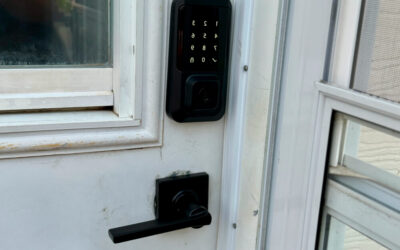
A smart lock replaces the key with your phone, a code, or a tap, and connects to your home network so you can lock up or let someone in from anywhere. For a family that is forever texting to ask whether the door got locked, that alone is the appeal.
The value of a smart lock is less about the hardware itself and more about the control it hands you over who comes and goes and when, which is what earns it a place on a busy household door:
- Access you control remotely: lock, unlock, and check the door from an app, wherever you are.
- Codes and logs instead of copies: hand a dog walker a temporary code and see when it was used.
Batteries and connections do need attention, and the security tradeoffs deserve a closer look, which we compare directly in are smart locks safer than traditional locks. Most models keep a mechanical key backup, so you are never fully locked out when the battery dies.
Keypad and keyless deadbolts: a code instead of a key
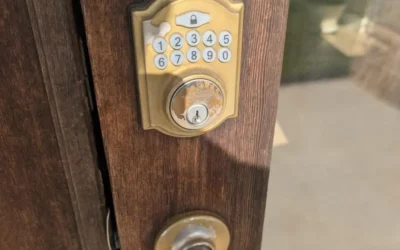
A keypad or keyless deadbolt sits one step short of a full smart lock. You unlock it by punching in a code, with no phone and no internet required, and many are simple battery-powered keypads, which keeps them reliable.
These fit the household that is tired of hiding a spare under the mat and tired of cutting a new key every time someone needs access, because a code quietly does all of that work instead:
- A code for everyone: give the family, a cleaner, or a guest their own code and change it whenever you want.
- Nothing to lose or copy: there is no physical key floating around to be duplicated at a hardware counter.
For a busy side or garage entry door, a keypad deadbolt removes the daily key fumble while still throwing a real bolt into the frame.
Expert Tip
The lock type matters less than whether it is installed and adjusted correctly. On service calls, the most common problem is not a weak lock, it is a good deadbolt that does not line up with its strike plate, so it never fully throws. A small strike alignment often does more than a whole new lock.
Biometric locks: a fingerprint instead of anything to carry
A biometric lock reads a fingerprint instead of accepting a key or a code. For a home with kids who lose keys, or anyone who would rather carry nothing at all, the appeal is obvious, since you become the key yourself.
These locks store a set of approved prints and open the moment a matching finger touches the reader. They usually keep a keypad or key backup too, in case a print does not read on a cold or wet day. How the technology holds up and where it fits best is its own subject, covered in how biometric locks work. As a home door lock, treat biometrics as a convenient front end on top of a solid deadbolt, not a replacement for one.
Padlocks: for gates, sheds, and anything off the house
Not every lock in a home is on a door. A padlock is the portable option for a gate, a shed, a fence latch, or a storage unit. Look for a shrouded or boron shackle if it lives outdoors, since a cheap padlock is quick work for a pair of bolt cutters. Keep padlocks for the outbuildings, and let dedicated door locks handle the house itself.
A quick word on lock grades
One label cuts across every type above. Locks are rated by ANSI and BHMA as Grade 1, Grade 2, or Grade 3, a score for how much force and daily wear they can take before they start to fail, and it is worth knowing which is which:
- Grade 1: the highest residential and commercial rating, built for the most use and abuse.
- Grade 2: a solid middle for most homes.
- Grade 3: basic residential security, fine for interior or low-traffic doors.
When two deadbolts look identical on the shelf, the grade is often what separates the one that lasts from the one that loosens within a year. For the doors where you want the most resistance to force, picking, and copying, that is the territory of high-security locks, which sit a step above the usual grades.
How to choose the right lock for each door
The right lock is rarely one answer for the whole house, since it changes door by door and with how you actually live, so it helps to walk through the situations that come up most often:
- Front and back doors: a Grade 1 or Grade 2 single-cylinder deadbolt is the baseline, and it is the door where quality matters most
- An older home in Dallas: original mortise hardware is often worth restoring, while mismatched add-on locks may need rekeying to one key.
- A rental near College Station: keypad or smart locks let you change codes between tenants without cutting new keys every turnover.
- A coastal home in Corpus Christi: salt air seizes cheap exterior locks, so weather-rated hardware and a higher grade pay off.
- Gates and sheds: a weatherproof padlock, kept separate from your door hardware.
If your real question is which type stops a break-in and what it costs, that is the security side of the decision, and we lay it out in best locks to prevent home burglaries.
Not sure which lock belongs on which door?
Every home is a mix of doors, ages, and habits, and the right setup is rarely the same lock everywhere. At Texas Premier Locksmith we walk the property, match each door to the lock that fits how you actually live, and rekey or upgrade what needs it, for homes across Texas. Tell us what you are working with and we will help you sort it out.
Written By
TPL
Texas Premier Locksmith Team
Texas Licensed Locksmith — License #B17236
Serving homes across Texas.
Key Won’t Turn in Your Front Door Lock? Here Is What Is Actually Wrong
Residential · BLOGKey Won't Turn in Your Front Door Lock? Here Is What Is Actually Wrong Texas Premier Locksmith Serving All of Texas Licensed & Insured, TX #B17236 All Makes & Models Mobile Service to Your Location Mon to Sat, 7am to 10pm [post_updated label="Last...
Doorknob Turns But the Door Won’t Open? Here Is What Has Failed
Residential · BLOGDoorknob Turns But the Door Won't Open? Here Is What Has Failed Texas Premier Locksmith Serving All of Texas Licensed & Insured, TX #B17236 All Makes & Models Mobile Service to Your Location Mon to Sat, 7am to 10pm [post_updated label="Last...
How to Stop Package Theft at Your Front Door
Residential · BLOGHow to Stop Package Theft at Your Front Door Texas Premier Locksmith Serving All of Texas Licensed, bonded & insured TX License #B17236 Mobile service across Texas Mon to Sat, 7am to 10pm Why...
The Best Smart Lock for Your Corpus Christi Airbnb
Residential · BLOGThe Best Smart Lock for Your Corpus Christi Airbnb Texas Premier Locksmith Serving All of Texas Licensed, bonded & insured TX License #B17236 Mobile service across Texas Mon to Sat, 7am to 10pm [post_updated label="Last Updated:" format="F j,...
Texas Premier Locksmith
Frequently Asked Questions
What is the most secure type of lock for a front door?
A Grade 1 deadbolt is the baseline, since it is the bolt that actually holds the door. Smart or keypad versions add convenience on top, but the grade and the install are what secure it.
Can I put a smart lock on any door?
Most retrofit onto a standard deadbolt preparation, but check your door thickness and backset first, since a few models need a specific bore or a particular door type.
What is the difference between a deadbolt and a latch?
A spring latch pushes open under pressure and is meant to keep a door shut, while a deadbolt throws a solid bolt into the frame that does not retract without being turned.
Should every door in my home use the same lock?
No. Match the lock to the door and how it is used, though you can have several exterior locks keyed alike so that one key opens them all.