


How to Get Back Into Your House When You Are Locked Out
- Texas Premier Locksmith
- Serving All of Texas
 Licensed and Insured
- Non-Destructive Entry First
- Mon to Sat, 7am to 10pm
- Texas Statewide Coverage
 Licensed and Insured
Published On:September 1, 2021

Last Updated:
Common Lockout Situations We See Every Day
You step outside to grab something from the car, or let the dog out, or carry the groceries in. The door closes behind you, and suddenly you realize your keys are inside, along with your phone. You are standing outside your home, hands empty, trying to figure out what to do next.
Most people we help tell the same kind of story. A five second trip to the porch, a toddler who reached up and turned the thumb turn, a back door that was supposed to be unlocked and was not, a gust of wind that shut the door harder than expected. The situations are rarely dramatic. They are just small moments where one normal day takes a small wrong turn, and now you have a problem that needs solving.
Some lockouts are only inconvenient. You are stuck outside for a bit, you figure something out, the day moves on. But others turn serious fast. If there is a child or pet locked inside without you, if someone in the house needs medication they cannot reach, if the Texas heat is climbing past 100 and you have nowhere to sit, or if it is late and you are outside in freezing weather with no businesses or neighbors awake to help, the situation stops being annoying and starts being something you need to handle carefully and quickly.
This guide walks you through what actually works, what to skip, and what a real locksmith does when we show up. It is written from experience, not theory.
In This Article
What We Cover
The First Five Minutes: Do These Before Anything Else
Before you try anything, slow down. This is the part most people skip, and it is the part that saves the most lockout calls. More often than not, there is an easier way into your home than whatever you are about to attempt. We see it all the time. Someone is already prying at the front door with a butter knife when the side gate was unlocked the whole time.
So walk around the house first. Check these, in this order:
- Every other door. Back door, garage side door, patio slider, laundry room door if you have one. You would be surprised how often one of them was left open from earlier in the day.
- Your garage. If your car is in the driveway and the opener is in the car, you are already in. Also worth checking the keypad on the outside of the garage if you have one. A lot of people set these up years ago, never use them, and completely forget the code is still active.
- First floor windows. Not to climb through, just to see. If one is unlocked and accessible, you might not need a locksmith at all. Only try this if the window is clearly yours and you can do it safely.
- Your smart lock app. If you have a Schlage Encode, August, Yale Assure, or Kwikset Halo, open the app on your phone. This one catches people off guard in the panic. The lock is already connected. You can just unlock it.
- Anyone with a spare. A partner, a roommate, a neighbor you trust, a parent who lives nearby. A 15 minute drive from someone with a key beats almost any DIY attempt you are thinking about.
- Any hidden key you used to keep. Even if it was years ago. Check the old spot. Sometimes it is still there.
If you have worked through all of that and you are still outside, that is the point where it makes sense to stop and think about your next move. Everything that comes next in this guide is about what to do when the easy options are gone.
What Actually Works and What to Skip
Once the easy options are gone, this is where people start getting creative. And honestly, this is where most of the damage happens. Not damage from the lockout itself, damage from what the homeowner tried before we got there.
Let us walk you through what you have probably heard about, and what we actually see happen when people try these things.
The credit card trick
This only works on a spring latch, the kind you find on interior bedroom and bathroom doors. Front doors have deadbolts, and a credit card does nothing against a deadbolt. You will bend the card, maybe snap it, and the door stays locked.
Removing the doorknob from outside
Rarely works. Exterior doorknobs are designed with the mounting screws on the inside so no one can do this. If your screws are visible from outside, that is a separate security issue worth looking at after we get you in.
Picking the lock with a bobby pin
Be honest with yourself here. Movies make this look quick. In real life, even trained locksmiths take time on certain locks, and that is with proper tools. A bobby pin usually bends or snaps inside the keyway. Then we have to extract broken metal before we can even start the lockout.
Climbing through a window
Only consider it if it is ground floor, clearly yours, unlocked, and you can reach it safely. Even then, think twice. People fall. People cut themselves. And neighbors often call the police on homeowners trying to get into their own home, because from the street it looks like a break-in.
Kicking the door in
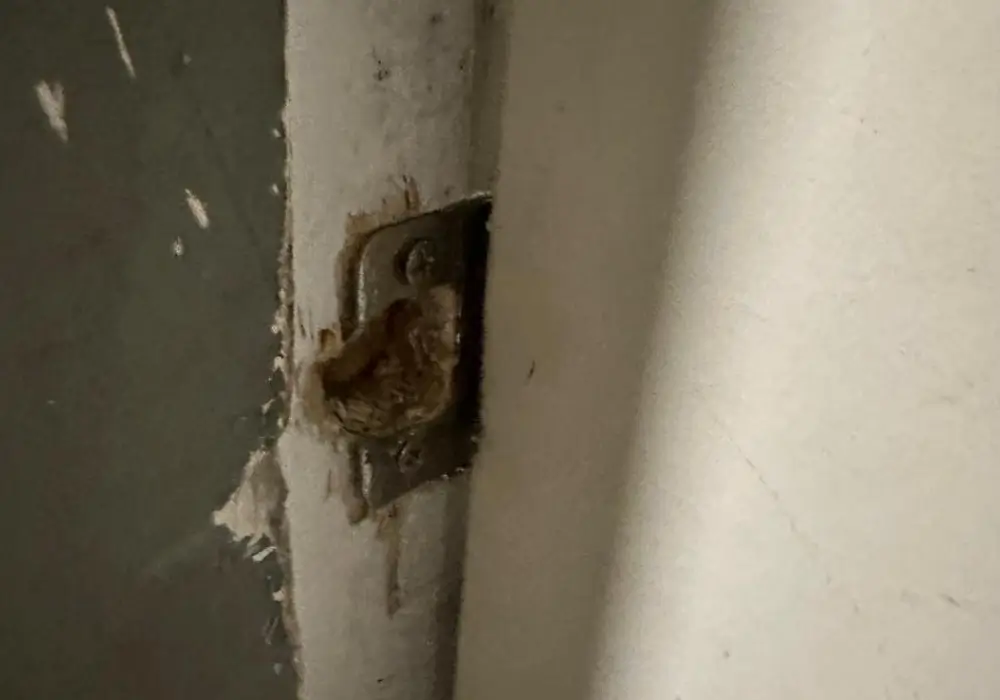
Please do not. The lock is not what breaks, the frame breaks. You end up needing a new jamb, the door re-hung, and a new lock anyway. Plus you can hurt yourself.
Prying with a screwdriver. You will damage the door and strike plate, and still not get in.
Do Not Attempt This
These moves can turn a manageable lockout into a bigger repair bill or a serious security risk:
- Drilling your own lock
- Forcing metal tools deep inside the keyway
- Hiring someone off a random online listing who shows up in an unmarked car and wants cash upfront
- Letting anyone work on your door who cannot give you a Texas locksmith license number
Avoid These Online Lockout Tricks
A lot of the lockout hacks you see online are old techniques that worked on hardware from 20 or 30 years ago. Most of them do not work on anything built in the last 15 years, and a few are genuinely unsafe to try.
Residential locks have come a long way. Most homeowners today are up against stronger deadbolts, picking and bumping resistance, tougher doors and frames, and smart locks that can detect tampering from outside.
Here is the part nobody mentions online. Once a homeowner forces a lock, it usually ends up damaged enough that we have to replace the whole thing anyway. A simple non-destructive pick-and-open turns into a full lock replacement. You end up paying for the lockout, the damage, and new hardware, when one call at the start would have cost a fraction of that.
The Story of a Spare Key: The Quiet Hero of Every Lockout
A lot of people only think about spare keys after a lockout, when they are already standing outside their door, wishing they had planned for this earlier. It happens to the most organized, careful homeowners too. A spare key is one of those things that feels unnecessary until the moment it is not.
A well placed spare key is not a luxury. It is a small piece of planning that can save you a late night call, a repair bill, and sometimes a much bigger situation. If a trusted neighbor has your spare, you are back inside in 15 minutes. If you have a proper lockbox mounted somewhere discreet, you never have to try risky DIY methods that damage your lock. If you have thought about it ahead of time, it will save you a lot of hassle and trouble.
Homeowners who have a real spare key plan almost never end up as emergency calls. That is the short version.
- Give a spare to someone you trust nearby. A neighbor, a close friend, or a family member within a 15 minute drive.
- Use a real lockbox if you need outdoor access. A bolted-down key lockbox with a combination, mounted somewhere discreet and not on the front porch.
- Rotate the spot if you suspect anyone knows. If you ever left a key out for a contractor, dog walker, babysitter, or an ex, move it.
- Keep a spare at your workplace. If you are at the office five days a week, a spare in your desk or locker is another solid backup.
Expert Tip: Spare Key Strategies You Should Avoid
Not every spare key idea is a good one. Under the doormat, above the door frame, inside a fake rock near the porch, taped under a potted plant, or tucked inside the mailbox. These are the first spots checked by anyone looking to get in. Professional burglars know these old tricks, and so do curious teenagers and delivery drivers who have been in the neighborhood long enough. If you want a spare accessible from outside, use a real lockbox. Otherwise, keep it with a trusted person.
Locked Out of Your Home Right Now?
If you are standing outside your door as you read this, you do not have to figure this out alone. Our licensed technicians work across Texas, with non-destructive entry first and a written quote before any work starts. Most homes are open within minutes of us arriving.
When to Call a Locksmith vs When to Wait
Not every lockout needs an immediate call. Sometimes waiting is the right move. Sometimes it really is not. Most of the time, people know in their gut which one it is, they just want permission to trust it. Here is how we usually help people think through it when they call in.
When it is fine to wait:
- Your spouse, roommate, or family member is on their way home within the hour
- The weather is comfortable, it is daytime, and you have a safe place to sit like a neighbor’s porch or your car
- You have your phone and nothing inside the house is urgent
- You have not already tried random DIY methods, because once the lock is damaged, waiting does not help
- A child or pet is inside the house alone
- Someone inside needs medication, medical equipment, or immediate care
- The weather is dangerous, whether that is extreme heat, freezing temperatures, or an approaching storm
- It is late at night and you do not have a safe place to wait
- You left something cooking on the stove or an appliance running
- You feel unsafe in your current location
- You do not have a phone or a way to reach help
We hear from people all the time who waited for hours hoping the situation would solve itself, and then called us at midnight anyway, tired and frustrated. If your instincts are telling you to pick up the phone, listen to them. We would much rather take your call early than have you wait in discomfort for no real reason.
When you call a locksmith, they would ideally reach you within a 20 to 40 minute range depending on the day and time of traffic.
How to Spot a Legitimate Locksmith and Avoid the Scams
Scammers always count on emergency situations. They know you are stressed, you are in a hurry, and you will agree to almost anything just to get your door open. That is the whole business model.
Signs you are dealing with a real company:
- A Texas locksmith license number. A real locksmith gives you a license number on the phone without hesitation. Ours is B17236.
- A realistic quote before anyone is dispatched. Not “somewhere between $15 and $500.” A real price range based on what you describe.
- A marked vehicle and a uniformed technician. Company logo, company name, branded shirt.
- Non-destructive methods first. A skilled locksmith picks the lock or uses bypass tools before drilling. If the first thing a technician mentions is drilling, that is a red flag.
- Normal payment options. Card, check, or digital payment, with a written receipt. Cash-only demands are a scam pattern.
- A real business you can look up. Real website, real reviews, real phone number, real local presence.

What We Actually Do When We Show Up
People are often surprised by how a real locksmith gets a door open. It is much quieter and much less dramatic than the movies make it look. No kicked doors, no crowbars, no loud noises, just tools and technique.
Here is what usually happens when a technician arrives for a residential lockout:
- Lock picking. For a standard residential deadbolt, this is almost always the first thing we try. Professional picking tools, matched to the lock type, and a few minutes of work. The lock stays completely intact, and you keep using the same key afterward.
- Bypass tools. Certain door setups respond better to specific bypass tools that work on the latch or bolt without touching the pins inside the lock. Non-destructive, quick, and no damage to the hardware.
- Bump keys. On some older or standard locks, a controlled bumping technique opens the door quickly without damage. Not every lock can be bumped, and high-security locks are specifically built to resist it, but when it is the right fit, it works cleanly.
- Drilling. This is the last resort. We only drill when the lock is already damaged, when the keyway has broken metal from a DIY attempt, or when a high-security lock is not opening within a reasonable time. When drilling is necessary, we always explain why before we start. The lock will need to be replaced afterward, but the door and frame stay intact.
- Rekeying at the same visit. A lot of homeowners ask us to rekey the lock while we are already there, especially if they are not sure who has a copy of the existing key. It is cheaper than replacing the whole lock and it resets access completely. If you have lost your key or moved into a new place and never rekeyed, this is the right time to do it.
Expert Tip: Always Cut a Spare From the Original
When you have a spare key made, have it cut from your original key, not from another copy. Copies of copies lose accuracy with each cut. Eventually the key starts sticking, then it stops turning cleanly, and one day it simply will not work. You usually find out when you need it most.
If you have lost your original altogether, a locksmith can still make you a fresh house key using the lock itself. Here is how that process actually works.
What a House Lockout Costs in Texas
The honest answer is that it depends. Time of day, lock type, whether drilling is needed, and how far the technician has to travel all affect the final price. A standard daytime residential lockout with non-destructive entry sits in one range. A late-night call on a high-security lock or a damaged lock from a DIY attempt sits in another. We always give you a quote over the phone before dispatching anyone, so there are no surprises when the technician arrives.
For a full breakdown of what actually goes into the price, see our guide on how much a locksmith costs to unlock a house door.
If You Have Been Locked Out More Than Once, Maybe It Is Time for an Upgrade
If lockouts keep happening, your current setup is probably not the right fit for how you actually live, and a few simple upgrades can take the problem off your plate almost entirely.
These are the ones we usually suggest when homeowners ask what to do to stop going through this again:
- A keypad deadbolt. No key, just a code. One of the most reliable upgrades you can make, and it does not need Wi-Fi or an app to work.
- A smart lock with a keypad and phone control. Options like the Schlage Encode, Yale Assure, or Kwikset Halo give you a code for daily use plus the ability to unlock the door from your phone. You can also create temporary codes for family, housekeepers, or contractors.
- Rekeying all your doors to one key. Fewer keys to carry, fewer keys to lose.
- A fingerprint lock. Biometric deadbolts are reliable now. A nice option if your kids come and go on their own, because there is nothing for them to forget.
- A yearly battery check. Any keypad or smart lock runs on batteries. A dead battery can lock you out just as easily as a missing key.
Smart Ways to Prevent the Next Lockout
Here are some smart tips so you can avoid ending up locked out again. You do not need to do all of these. Choose what works best for your lifestyle, and you will almost never end up in this situation again.
Give a Spare to Someone You Trust
This is one of the single best lockout prevention tips we offer to our customers. It can be a neighbor, a close friend, or a family member within a reasonable drive. This step works better than any hiding spot, and it costs nothing.
Install a Real Lockbox
Not a fake rock or a hide-a-key. A bolted-down combination lockbox mounted somewhere discreet. Secure enough for emergencies without giving anyone an easy way in.
Switch to a Keypad Deadbolt
If you lock yourself out regularly, a keypad is the fix. No key to forget, no key to lose.
Keep a Spare in Your Car and at Work
If your car is always with you and you have a secure spot at your office, these are both reliable backups. Just keep the car spare hidden well inside the vehicle, not in the glove box.
Rekey After a Lost Key or a Move
If you moved into your home in the last year and never rekeyed, you do not actually know who has copies. Same if you recently lost a key. Rekeying resets access and gives you peace of mind.
Make Sure Everyone in the Household Knows the Plan
Kids, spouse, roommates. Everyone should know where the spare is, who has a backup key, and what to do if they come home and nobody is there.
Check Your Deadbolt Once a Year
Locks wear out. Sticky keys, slow turning, bolts that do not fully extend, these are warnings. A quick service check prevents the kind of failure that turns into a middle-of-the-night call.
Tricky Situations: Kids Inside, Late Night, No Phone
Over the years, we have walked homeowners through just about every kind of lockout situation you can imagine. A few come up often enough that they deserve direct answers. If you are in one of these right now, here is what to do.
- Locked out with a child or pet inside the house. Call a locksmith right away and tell them your child or pet is inside. If the child is in immediate danger, call 911. A locksmith is the right choice when the situation needs to be handled quickly but is not a true emergency.
- Locked out late at night. Stay somewhere safe while you wait. Your car, a neighbor’s porch, a nearby business, or a well-lit spot is better than sitting alone on a dark porch.
- Locked out with no phone. A neighbor, a nearby business, or a gas station will usually let you make a call. Memorizing a spouse or parent’s number helps, but recalling a number under stress is harder than people expect. A simpler fix is to keep a few important numbers written on a piece of paper in your wallet or purse. In a moment like that, it becomes the most valuable thing you have.
- Locked out in extreme weather. Texas summers get hot fast, and winter cold can be harder on the body than people realize. Do not wait it out, especially if anyone with you is young, elderly, or has a health condition. Call right away and stay somewhere sheltered.
- Locked out of a rental or someone else’s home. At a short-term rental, Airbnb, or a friend’s place while they are away, call the host or owner first. They often have a backup plan set up. If that does not work, a local locksmith can still help, just mention on the call that you are not the property owner.
Written By
TPL
Texas Premier Locksmith Team
Texas Licensed Locksmith — License #B17236
The Texas Premier Locksmith team is made up of licensed technicians who regularly handle residential lockouts across Texas. Our content comes from real service calls, the mistakes we have seen homeowners make, and the solutions that actually work on the doors and hardware found in Texas homes today.
“Texas Premier Locksmith is a licensed locksmith company in Texas (License #B17236) serving customers since 2011.”
Locked Out of Your Home in Texas? Call Texas Premier Locksmith Before You Try Anything Risky
We have spent years helping Texas homeowners through exactly the kind of situation you might be in right now. Our licensed technicians are trained to open locked doors without causing damage, to give you a clear quote before any work begins, and to leave your home more secure than they found it. Whether you are locked out, lost your keys, or need a rekey after a move, we handle it on-site, the right way, the first time.
Texas Premier Locksmith provides residential lockout services for: homes, apartments, condos, rental properties, and vacation homes.
We serve homeowners across Texas, with a strong local presence in Austin, Dallas, Cedar Park, Round Rock, and Georgetown, along with Killeen, Waco, College Station, San Marcos, Corpus Christi, Tyler, Abilene, Houston, San Antonio, and surrounding communities across the state.
Call us at (866) 948-8188 or request service online. We will confirm technician availability when you call.
Car Key Fob Stolen? Does Reprogramming Stop It From Unlocking Your Car?
Automotive Locksmith · BlogCar Key Fob Stolen? Does Reprogramming Stop It From Unlocking Your Car? Texas Premier Locksmith Serving All of Texas Licensed, bonded & insured TX License #B17236 Mobile service across Texas Mon to Sat, 7am to 10pm [post_updated...
Why Does My Deadbolt Only Lock When I Push or Pull the Door?
Residential · BLOGWhy Does My Deadbolt Only Lock When I Push or Pull the Door? Texas Premier Locksmith Serving All of Texas Licensed & Insured, TX #B17236 All Makes & Models Mobile Service to Your Location Mon to Sat, 7am to 10pm [post_updated label="Last...
Key Won’t Turn in Your Front Door Lock? Here Is What Is Actually Wrong
Residential · BLOGKey Won't Turn in Your Front Door Lock? Here Is What Is Actually Wrong Texas Premier Locksmith Serving All of Texas Licensed & Insured, TX #B17236 All Makes & Models Mobile Service to Your Location Mon to Sat, 7am to 10pm [post_updated label="Last...
Doorknob Turns But the Door Won’t Open? Here Is What Has Failed
Residential · BLOGDoorknob Turns But the Door Won't Open? Here Is What Has Failed Texas Premier Locksmith Serving All of Texas Licensed & Insured, TX #B17236 All Makes & Models Mobile Service to Your Location Mon to Sat, 7am to 10pm [post_updated label="Last...
Texas Premier Locksmith



Frequently Asked Questions About House Lockouts in Texas

How long does it take a locksmith to open a locked house door?
Most house lockouts are handled in 5 to 15 minutes once the technician is there. A standard deadbolt opens in just a few minutes. Locks already damaged from a DIY attempt can take longer. Travel time is usually the bigger wait, around 20 to 40 minutes in most Texas cities.
Can a locksmith unlock my house if I do not have my ID?
Yes, but we still need to confirm you live there. Mail with your name and address, a photo of your ID on your phone, or a neighbor who can vouch for you all work. Any real locksmith will check in some way, that is what tells you they are trustworthy.
Is it cheaper to unlock my door or replace the lock?
Almost always cheaper to unlock. A lockout service opens the door without damage, and your lock keeps working. Replacing only makes sense if the lock is already broken, if you lost your keys and want to reset access, or if you just moved in. If someone suggests replacing before trying to open it, ask why.
What should I do if my key broke off in the lock?
Do not push it deeper, do not use glue, and do not try to pull it out with tweezers. Any of that can damage the pins inside and turn a quick fix into a new lock. Call a locksmith, we have small tools made for this. In most cases your key and lock still work fine after.