

Rekeying vs Changing Locks: What Homeowners Need to Know Before Deciding
- Texas Premier Locksmith
- Serving All of Texas
 Licensed & Insured
- Most Makes & Models
- Mobile Service to Your Location
- Mon to Sat, 7am to 10pm
 Licensed & Insured
Published On:June 30, 2021

Last Updated:
Rekeying vs Replacing Your Locks: Which One Is Right for Your Home?
You just closed on a new home and have no idea how many people the previous owners handed keys to over the years. A tenant or a roommate left on bad terms and still has a spare. Your keys went missing somewhere between the grocery store and your driveway, and now you are standing at your front door wondering if it is still safe to use. Situations like these come up every single week in the homes we service across Texas, and the decision that follows is almost always the same one. Do you rekey the locks, or do you change them out completely?
Most homeowners instinctively want to replace all the locks because it feels safer. They want to swap out the old hardware, put in fresh locks, and be done with it. That feels like the thorough move, and sometimes it is the right call. But more often than not, rekeying does the same job for a fraction of the cost, and most homeowners had no idea that was even an option.
This guide walks you through what each option means, when each one is the right fit, and what it realistically costs across Texas homes. By the time a locksmith is on your doorstep, you already know what you should be expecting and paying for.
The Real Difference Between Lock Rekeying and Lock Replacement
Before you decide which one is right for your home, it helps to understand what each service actually involves, because the names sound similar but the work behind them is not.
Lock rekeying means keeping the existing hardware on your door and changing only the internal mechanism, specifically, the pin configuration inside the cylinder. After a rekey, your old keys stop working entirely. If your concern is that someone out there, a former tenant, a previous homeowner, an ex-partner, an old contractor, might still have a copy of your key, rekeying takes that worry off the table. The lock you already trust stays in place, and you simply get a new key that matches the new pin setup. The deadbolt, the knob, the finish, all of it stays the same.
Lock replacement means removing the entire lock hardware from your door, the cylinder, the housing, the faceplate, the strike plate, every piece of it, and installing brand new hardware in its place. You walk away with a different lock, different keys, and usually a different model if you are upgrading to something more secure. Replacement also lets you change the type of lock entirely, from a basic deadbolt to a keypad, smart lock, or high-security cylinder.
How Does a Lock Actually Work?
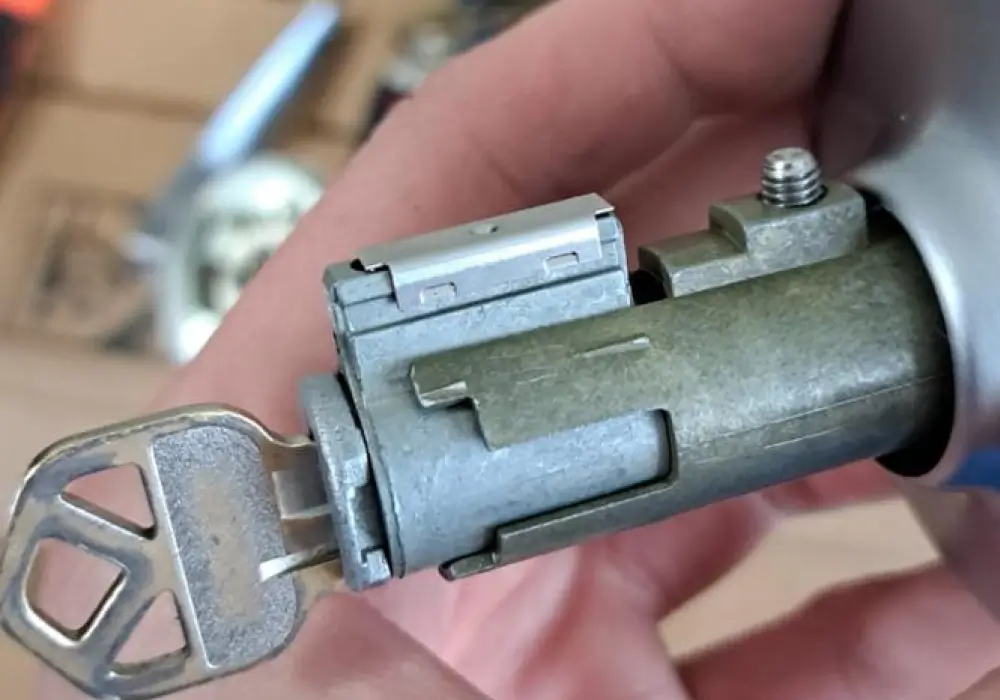
To understand why rekeying is even possible, it helps to know what is happening inside your lock. Most residential locks installed in Texas homes today operate on a pin tumbler system, and the mechanics are simpler than most homeowners realize.
- Inside the cylinder sits a series of small spring-loaded pins at different heights
- The correct key pushes each pin to the exact right position, freeing the cylinder to turn
- The wrong key leaves the pins misaligned, and the lock stays shut
- Rekeying works by changing those pins or resetting them so that only a new key will now open the lock
- Your old keys no longer open it, but the lock itself keeps functioning exactly as it did before
- A standard cylinder holds five or six pins, which is why most rekeys are quick work
When Should You Rekey Your Home Locks?
Rekeying is almost always the smarter move when the lock itself is still in good shape and the real concern is who has access to your home. In most of the scenarios below, replacement would be overkill, and rekeying gets you the same result for a fraction of the cost.
You Just Bought or Moved Into a New Home
You have no way of knowing how many copies of the existing keys are floating around. Previous owners, cleaners, contractors, neighbors with a spare, real estate agents, that list adds up fast. Rekeying every exterior lock in the home on day one resets access entirely, and it is one of the first things we recommend for new homeowners in Dallas and across Texas.
You Lost Your Keys or They Were Stolen
If your keys are genuinely missing, you cannot rule out the possibility that someone picked them up. Rekeying your locks immediately means whoever has those old keys cannot use them. This is one of the most common calls we get from homeowners in Killeen and other Texas cities, often within hours of a lost wallet or purse.
A Roommate, Tenant, or Family Member Moved Out
Anyone who had regular access to your home likely had a copy of the key at some point. Even if they returned it, copies are easy to make and hard to track. A separation, a divorce, a tenant moving out of your rental in San Marcos, or a grown child moving to college, each is a valid reason to rekey.
You Want All Your Locks Keyed Alike
If you have three exterior doors and three different keys, you are carrying a keychain full of hardware without reason. A locksmith can rekey all your locks to open with a single key, as long as they are compatible hardware. It is worth asking about while the technician is on site, since the cylinders have to be compatible.
You Had a Recent Lockout and Want to Reset Access
If you recently went through a lockout, especially one that involved handing your keys to someone to bring over, it is worth considering a rekey just to reset access cleanly. For more on handling a lockout itself, our guide on how to get back into your house when locked out walks through the safer steps.
When Should You Change Your Locks Instead?
Rekeying covers most situations, but not all of them. Some scenarios genuinely call for new hardware, and in those cases, spending a little more upfront saves you from ongoing headaches or real security risks. Here is when lock replacement is the right call.
Your Locks Are Old, Worn, or Sticking
If your key is getting harder to turn, the deadbolt does not fully extend anymore, or the knob feels loose in its housing, the hardware is at the end of its useful life. Rekeying an already worn-out lock resets who has a key, but it does not fix what is wearing out inside it. Most residential locks last 7 to 10 years with regular use, and once they start showing their age, new hardware is the better answer.
After a Forced Entry or Break-In Damage
If someone has tried to kick your door in, pry the lock, or drill the cylinder, the internal mechanism is almost always compromised, even if it still technically works. The pins, the springs, the bolt assembly, any of them can be subtly damaged in ways that make the lock unreliable or easier to defeat the next time. Homeowners we have worked with in Temple after break-ins almost always need full replacement, not a rekey.
Your Lock Type No Longer Matches Your Security Needs
A basic builder-grade deadbolt installed with your home 15 years ago is not the same tier of protection you might want today, especially if you live in a higher-risk area or keep valuables at home. If your security needs have changed, whether after a neighborhood incident, a home renovation, or simply wanting better peace of mind, replacement is the only way to step up to stronger hardware.
You Have Mismatched Hardware Across Doors
If the previous owner installed a mix of brands and styles, your doors probably have a collection of mismatched deadbolts, knobs, and finishes. Rekeying them to the same key is possible only if the cylinders are all the same brand and compatible type. If they are not, replacement is the cleaner route, and you get a unified look at the same time.
The Existing Lock Cannot Be Rekeyed
Some locks are simply not rekeyable. Very old hardware, certain high-security cylinders, and specific smart lock models do not allow pin-swapping in a practical way. A technician can confirm this quickly on inspection. If the lock falls into that category, replacement is your only option regardless of preference.
Expert Tip: Ask the Locksmith to Inspect the Lock First
Not every lock can be rekeyed, and not every worn-out lock is worth rekeying even if it technically can. Before you commit, ask the technician to physically inspect your hardware and explain their recommendation. Any locksmith quoting over the phone without ever looking at your lock is not giving you an accurate assessment.
Thinking About a Lock Upgrade? Your Options Explained
Residential lock technology has come a long way in the last decade, and the upgrade options available today can genuinely boost your home security, take the stress out of losing keys, and change how you move in and out of your own home. Here are the most common options for homeowners thinking about a lock upgrade.
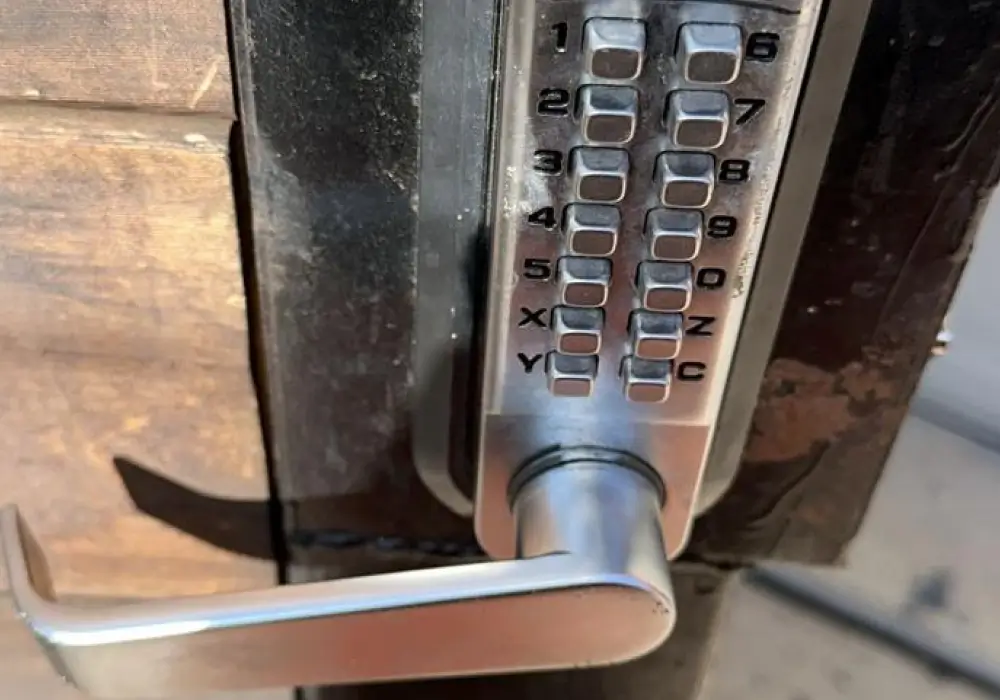
Keypad Deadbolt (Keyless Entry)
This is the simplest upgrade, and it is the best fit for homeowners who lock themselves out frequently or households where multiple family members come and go at different times.
- A keypad deadbolt replaces your key with a four to six digit code
- No Wi-Fi, no app, no smartphone required
- Runs on batteries that typically last 12 to 18 months
- Most models include an emergency key override
- One of the most reliable keyless options on the market today
- Typical cost range: $80 to $250 installed
Smart Lock (Wi-Fi or Bluetooth)
A good fit for homeowners who travel often, rent their home out on Airbnb, or want detailed access logs for who came and went.
- Adds everything a keypad does, plus remote control from your phone
- Lock and unlock your door from anywhere with an internet connection
- Create temporary codes for house cleaners, dog walkers, or short-term guests
- Get notifications every time someone enters the home
- Popular models: Schlage Encode, August Smart Lock, Yale Assure, Kwikset Halo
- Typical cost range: $200 to $400 installed
Biometric Lock (Fingerprint)
A solid fit for families with kids who forget codes, or homeowners who simply do not want to deal with keys or passwords at all.
- Opens with your fingerprint, usually in under a second
- Includes a backup keypad and override key for emergencies
- Fingerprint recognition on residential locks is fast and reliable now
- Stores multiple fingerprints, so everyone in the household can have access
- Works without Wi-Fi or app setup for most models
- Typical cost range: $180 to $350 installed
High-Security Deadbolt
The right fit for homeowners who have experienced a break-in, keep valuables at home, or live in areas with higher property crime.
- Built to resist picking, bumping, drilling, and key duplication
- Uses restricted keyways that cannot be copied at a hardware store
- Popular brands: Medeco, Mul-T-Lock, Schlage Primus
- Significantly harder to defeat by forced entry than standard residential deadbolts
- Your existing key and daily use experience stays the same, just on much stronger hardware
- Typical cost range: $200 to $450 per lock, installed
Not Sure Whether to Rekey or Replace?
You do not have to figure it out alone. Our licensed locksmiths visit your home, inspect your current locks, and give you a clear recommendation based on what your hardware actually needs, not what costs more. If a simple rekey solves the problem, that is what we will tell you. If replacement or an upgrade is the smarter move, we walk you through the options and pricing before any work begins.
Cost Comparison: Rekeying vs Lock Replacement in Texas
Pricing is one of the main reasons homeowners hesitate to make a decision, so here is what each option actually runs across Texas homes. These ranges reflect standard residential work during business hours. After-hours or emergency calls carry additional fees.
Service and Typical Cost
Rekey per cylinder
Full home rekey (3 to 4 locks)
Single lock replacement (standard deadbolt)
Full home lock replacement (3 to 4 locks)
Upgrade to keypad deadbolt (installed)
Upgrade to smart lock (installed)
Upgrade to biometric lock (installed)
Upgrade to high-security deadbolt (installed)
Prices reflect standard daytime residential service. After-hours, weekend, and emergency calls fall on the higher end or above these ranges.
A few things worth pointing out about these numbers. Rekeying almost always wins on cost, a full home rekey of three to four doors typically stays under $200, while full replacement can run three to four times that. But cost is not the only factor. If your locks are old, worn, or compromised after a break-in, the money goes on new hardware instead. Pricing also varies slightly by city, rates in urban areas run a little higher than in smaller towns like Abilene, but not by much.
For a deeper look at what residential locksmith services cost and what actually affects the price, see our detailed breakdown on how much a locksmith costs to unlock a house door.
Expert Tip: Match All Your Exterior Locks to One Key
If you are already paying a locksmith to rekey or replace one lock, matching your other exterior locks to the same key at the same visit saves you from carrying a separate key for every door on the house. Compatible hardware is required, which the technician confirms on site.
Red Flags to Watch For
Not every locksmith gives straight advice, and rekeying and replacement are two of the most common residential services where homeowners get pushed into paying more than they should. Here is what to watch out for before you commit.
Red Flag: Full Replacement Recommended Without Inspecting the Lock
If a locksmith tells you replacement is the only option without ever looking at your hardware, that is a sales pitch, not an assessment.
Red Flag: Quote Does Not Mention the Number of Cylinders
Rekeying is priced per cylinder, not per door. A flat quote without asking how many locks you have usually means an upcharge on arrival.
Can You Rekey a Lock Yourself?
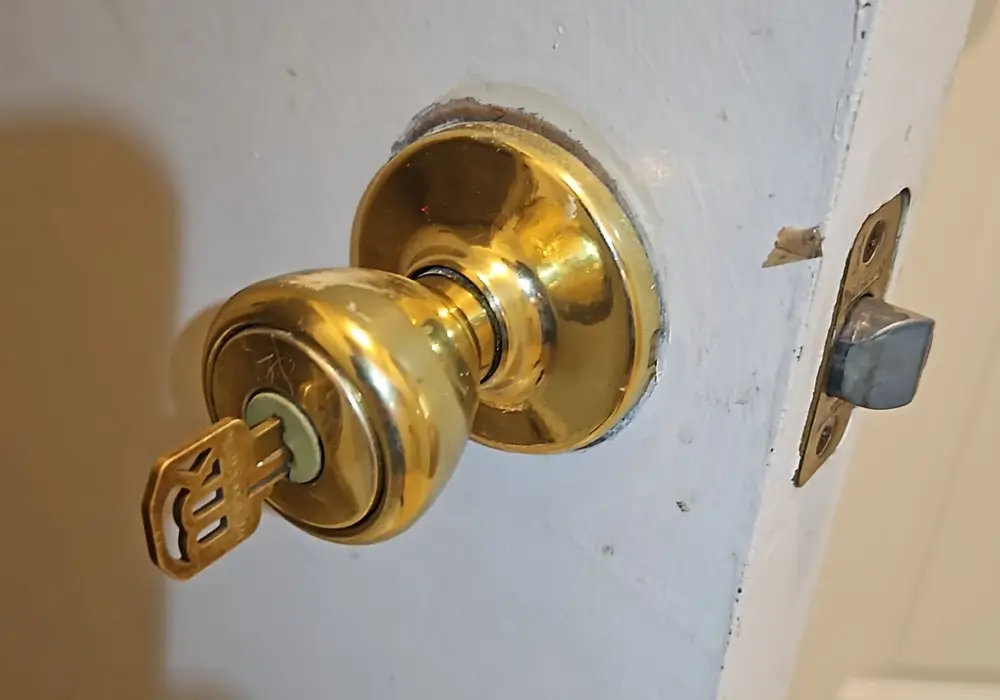
This question comes up often, and the direct answer is yes, technically you can. Rekey kits are available at most hardware stores for under $20, and some of the newer residential lock brands, particularly Kwikset SmartKey, are designed specifically to allow homeowners to rekey without professional tools. That said, there are real reasons most homeowners end up calling a locksmith anyway.
DIY rekeying works best when:
- You have a Kwikset SmartKey or similar homeowner-friendly lock
- You only need to rekey one or two locks
- You already have both the old working key and the new key
- You are comfortable with small mechanical work
- You have older or higher-end hardware that requires professional tools
- You want multiple locks keyed alike, which gets tricky without matched pin kits
- You no longer have the original working key (most DIY kits require it)
- One mistake with the pins can damage the cylinder, turning a $20 kit into a full lock replacement
For most homeowners, paying a professional is simply the better call. A licensed technician can usually complete a home rekey in one visit. To see everything else we handle beyond rekeying, our residential locksmith services page has the full picture.
When to Call a Professional Locksmith
If you are short on time, unsure about the type of lock you have, or dealing with a situation that feels more urgent than a routine rekey, calling a professional is almost always the right move. Most residential rekeys and lock replacements are completed in under an hour by an experienced technician, and the cost of getting it done correctly the first time is almost always lower than fixing a DIY mistake later. A good locksmith will also spot things a homeowner might miss, worn internal components, misaligned strike plates, or hardware that is not actually worth rekeying, and flag them before any work starts. That inspection is often the most valuable part of the visit.
Ready to Rekey or Replace? Here Is How We Can Help
If you are weighing rekeying against lock replacement and still are not sure which way to go, we can walk you through it. Our technicians visit your home, inspect your current locks, and give you a clear recommendation based on what the hardware actually needs, not what costs more. Whether you want a simple rekey, a full lock replacement, or an upgrade to a keypad, smart lock, biometric, or high-security system, we handle all of it on site. Most residential jobs are completed in under an hour, with upfront pricing before we start.
Call Texas Premier Locksmith at (866) 948-8188 or request service online. We serve homeowners statewide, including the smaller communities outside the metros.
Written By
TPL
Texas Premier Locksmith Team
Texas Licensed Locksmith, License #B17236
The Texas Premier Locksmith team is made up of licensed technicians who regularly handle residential rekeys, lock replacements and home security upgrades across Texas. Our guidance comes from real service calls, the mistakes we have seen homeowners avoid, and the decisions we have helped them make confidently. License #B17236, serving Texas homeowners since 2011.
An Employee Left With Your Business Keys: Do You Need to Rekey?
Commercial Locksmith · Blog An Employee Left With Your Business Keys: Do You Need to Rekey? Texas Premier Locksmith Serving All of Texas Licensed, bonded & insured TX License #B17236 Mobile service across Texas Mon to Sat, 7am to 10pm [post_updated label="Last...
Car Key Fob Stolen? Does Reprogramming Stop It From Unlocking Your Car?
Automotive Locksmith · BlogCar Key Fob Stolen? Does Reprogramming Stop It From Unlocking Your Car? Texas Premier Locksmith Serving All of Texas Licensed, bonded & insured TX License #B17236 Mobile service across Texas Mon to Sat, 7am to 10pm [post_updated...
Why Does My Deadbolt Only Lock When I Push or Pull the Door?
Residential · BLOGWhy Does My Deadbolt Only Lock When I Push or Pull the Door? Texas Premier Locksmith Serving All of Texas Licensed & Insured, TX #B17236 All Makes & Models Mobile Service to Your Location Mon to Sat, 7am to 10pm [post_updated label="Last...
Key Won’t Turn in Your Front Door Lock? Here Is What Is Actually Wrong
Residential · BLOGKey Won't Turn in Your Front Door Lock? Here Is What Is Actually Wrong Texas Premier Locksmith Serving All of Texas Licensed & Insured, TX #B17236 All Makes & Models Mobile Service to Your Location Mon to Sat, 7am to 10pm [post_updated label="Last...
Texas Premier Locksmith



Frequently Asked Questions

How often should I rekey my home locks?
Most homeowners should rekey every 3 to 5 years, or sooner after a move, lost key, or break-in. Regular rekeying keeps access tight and prevents old keys from quietly circulating for years.
Can all home locks be rekeyed, or do some have to be replaced?
Most standard residential deadbolts can be rekeyed, but older hardware, certain high-security cylinders, and some smart locks cannot. A quick inspection by a licensed locksmith confirms which category your lock falls into.
Will rekeying my locks lower my homeowners insurance?
Not directly in most cases, but upgrading to high-security deadbolts, smart locks, or verified security hardware often qualifies for discounts. Check with your insurer before scheduling an upgrade to confirm what they accept.
What happens to my old keys after the locks are rekeyed?
They stop working the moment the pins are reset. You can keep them as keepsakes, recycle the metal, or throw them out. Either way, they will not open your door again.
Can a locksmith rekey my smart lock or keypad deadbolt?
Smart locks and keypad deadbolts work on codes or apps, not traditional pins, so they cannot be rekeyed the usual way. A locksmith can reset codes, reprogram access, or replace the unit if needed.
How long does it take a locksmith to rekey a home?
A standard residential rekey for three to four exterior locks takes 30 to 60 minutes on site. A single cylinder is usually done in under 15 minutes by an experienced technician.
Is rekeying as secure as replacing the lock entirely?
Yes, as long as your existing hardware is in good condition. Rekeying resets access completely and your old keys stop working. Security only suffers when the lock itself is already worn or damaged.
Do I need to rekey the locks every time a tenant moves out of my rental property?
Yes, rekeying between tenants is the smartest way to protect your rental. It resets access without replacing hardware, and costs far less than a full lock replacement after every turnover.