

What to Do When You’re Locked Out of Your House: A Step-By-Step Plan for Homeowners
- Texas Premier Locksmith
- Serving All of Texas
 Licensed & Insured, TX #B17236
- All Makes & Models
- Mobile Service to Your Location
- Mon to Sat, 7am to 10pm
 Licensed & Insured, TX #B17236
Published On:May 12, 2021

Last Updated:
Locked Out of Your House? Before You Panic, Read This First
Being locked out of your own home is disorienting. One minute you are walking to the car, or bringing in groceries, or coming back from the mailbox. The next minute you are on your own porch, realizing the keys are on the kitchen counter and the door just closed behind you.
This happens to almost everyone at some point. Most lockouts trace back to a small moment of distraction, a door that closed harder than expected, or a routine shift in the day that threw things off. Almost every house lockout has a calm, straightforward path out of it, and nothing good comes from rushing into a decision you will regret later.
This guide gives you a clear order of what to do. What to check first, who to call, when the situation qualifies as an emergency home lockout, what to avoid, how to stay safe if you end up waiting, and what to do if a locksmith is not reachable and you have nowhere safe to go. Real guidance, drawn from years of handling these calls across Texas.
Locked Out Right Now? Check These Safe Options First
Before anything else, pause for a minute. Most house lockouts have an easier way in than the one you are about to try, and the fastest way back inside usually starts with a quiet walk around your home.
Walk the perimeter and check these, in order:
- Every other door. Back door, patio slider, garage side door, laundry entrance. One is often unlocked from earlier in the day.
- The garage. If your car is in the driveway with the opener clipped to the visor, you are already in.
- The garage keypad. Many homes have an exterior keypad that was set up years ago and forgotten about. The code is almost always still active.
- Your smart lock app. If you have a Schlage Encode, Yale Assure, or Kwikset Halo, open the app on your phone. The lock is already connected and can unlock with one tap.
- A ground-floor window. Only if it is clearly yours and you can reach it without risk. Neighbors have called the police on homeowners trying to get into their own home, because from the street it looks exactly like a break-in.
If none of that gets you back inside, the rest of this guide takes over.
Who to Call Before You Call a Locksmith
A residential locksmith is not always the first call. Someone closer to home can often get you back inside faster, and usually for free. Before dialing an emergency line, work through this list:
- A partner or family member living with you. A 20 minute drive with a working key often beats a locksmith dispatch, especially during heavy traffic hours.
- A roommate or adult housemate. Anyone who shares the home and has their own key is the fastest route back in.
- A trusted neighbor with a spare. If you gave a spare to a neighbor years ago, this is the moment it pays off. A short walk next door beats every other option here.
- Your landlord or property manager. If you are locked out of an apartment in Texas, or any rental, this is a required call. Most landlords have a master key and a standard process for lockouts.
- Your apartment leasing office. If you live in a complex, the leasing agent on duty almost always has a key. After hours, most complexes have an emergency maintenance line.
- A nearby family member with a spare. A parent, sibling, or adult child within driving distance counts as a first-call option.
If none of these work, or the wait will be longer than is safe or practical, a licensed residential locksmith near you becomes the right call. Skipping straight to the locksmith is also a reasonable choice, especially in bad weather, with kids or pets inside, or when you simply want the situation resolved quickly.
Locked Out of an Apartment
A rental works differently from a house you own, and the order of who to call changes with it. In most apartment complexes somebody on site can let you in without a service call at all, which is why the office comes before everything else.
- The leasing office first: most keep a master key and will let you in during office hours.
- The emergency maintenance line after hours: it is on your lease or posted at the community entrance. Ask for a realistic time before you decide to wait for it.
- A locksmith, if nobody can come: you do not need the landlord’s permission to be let into your own unit, but you will need proof you live there. A lease, a bill, or mail with your name and unit number, plus photo ID.
- No lock changes: rekeying is the landlord’s decision in a rental, and doing it yourself usually breaks the lease.
When a House Lockout Becomes a Real Emergency
Not every lockout is urgent. Some are a mild inconvenience and the day keeps moving. Others shift quickly into a situation that needs to be handled immediately.
Treat it as an emergency home lockout and call for help right away if any of these apply:
- A child is inside the home alone. Call a locksmith immediately. If there is any sign of real danger, call 911.
- A pet is inside without air conditioning or water. Texas summers turn a closed home dangerous within minutes. Pets cannot wait this out.
- Someone inside needs time-sensitive medication or medical equipment. Insulin, oxygen, heart medication, inhalers. Do not treat this as a regular lockout.
- You left something on the stove or an appliance running. A forgotten burner or a running dryer becomes a fire hazard with every passing minute.
- The weather is extreme. Triple-digit heat, freezing temperatures, or a storm with nowhere safe to shelter. Pushing through those conditions outside for an hour is not reasonable.
- It is late at night and you have nowhere safe to wait. Figuring this out alone on an unfamiliar porch at 2 a.m. is not a situation to accept.
- Your surroundings feel unsafe. If something feels off, move to a safer spot and make the call from there.
A regular lockout allows time to work through the easier options. An emergency lockout does not.

Mistakes to Avoid While You Are Locked Out
The instinct during a lockout is to do something, anything, to get back inside quickly. That instinct is usually what creates a bigger problem. A few quick moves turn a simple lockout into a serious repair, and we see the aftermath often.
Stay away from these:
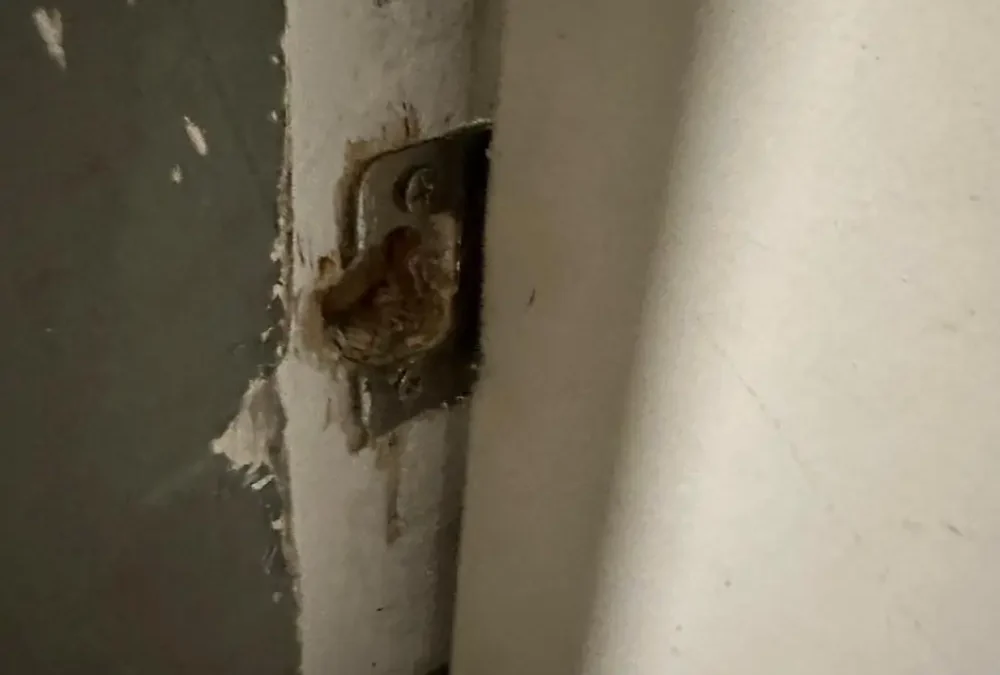
- Forcing the door open. Kicking, shoulder-ramming, or prying with a hard object does not beat the lock. It breaks the door frame and strike plate. You end up needing a new frame, the door re-hung, and a new lock. A standard lockout call turns into several hundred dollars of repairs.
- Sticking things into the keyway. Bobby pins, paperclips, and small screwdrivers bend, snap, and leave metal lodged inside the lock. The metal has to be extracted before the actual lockout work can begin, and the lock sometimes needs full replacement.
- Trusting random online tutorials. Most of the tricks circulating online were written for hardware from decades ago. Modern residential locks are built to resist those methods.
- Hiring whoever shows up first in a search result. Lockout scams run on panicked homeowners. If a listing has no physical address, no Texas locksmith license number, or quotes you a suspicious $19 rate, it is not a real business. You will end up paying far more than a legitimate locksmith would have charged.
- Paying cash upfront to a technician you cannot verify. Licensed locksmiths accept card, check, and digital payment and provide a written receipt. Cash-only demands before work begins, combined with pressure to decide fast, are a scam signal.
- Climbing to a second-floor window. Falls from residential windows are more common than people realize. No time saved is worth an injury.
One calm phone call almost always costs less than the first ten minutes of a rushed decision.
When Calling a Locksmith Is the Right Move
After the easier options are exhausted, or when the situation will not wait, a licensed locksmith is the fastest and safest way back inside. Most people delay the call longer than they need to, usually hoping someone with a spare will appear or trying to avoid the cost.
Pick up the phone when:
- No one with a spare can reach you within a reasonable window. If the closest person is more than 45 minutes out and you are standing outside with nowhere comfortable to wait, a locksmith will usually arrive sooner.
- The weather or the hour is working against you. Heat, cold, rain, or darkness shifts the decision from waiting to handling it now.
- You already tried something and it did not work. Once DIY attempts start, the lock is usually compromised. Waiting longer only makes the eventual repair worse.
- You have somewhere to be. A shift, a pickup, an appointment. A 30 minute locksmith visit protects the rest of your day.
A licensed residential locksmith arrives with the tools to open a standard door without damage, typically in under 15 minutes of on-site work. Travel time is usually 20 to 40 minutes depending on your city and the hour. For a detailed breakdown of what a house lockout costs in Texas, we cover pricing by lock type and situation in a dedicated guide.
Locked Out of Your Home in Texas Right Now?
If you are on your porch reading this, stop working through the list. A licensed Texas Premier Locksmith technician will confirm availability and begin with the least destructive method suitable for your lock. We explain the expected charges before dispatch and the final price before work begins.
What to Tell the Locksmith When You Call
A short, clear call gets a technician to you faster and avoids confusion when they arrive. Most dispatchers ask a similar set of questions, and having the answers ready saves time on both sides.
Have this ready before you dial:
- Your exact address. Include the unit or apartment number if it applies. If calling from a spot nearby, give the address of the actual house being opened.
- The type of door and lock. Front, back, or side door. Standard deadbolt, keypad, smart lock, or something else. A brief description is enough if you do not know the brand.
- Whether the lock is damaged. If a credit card, screwdriver, or anything else was tried, mention it. It changes the tools needed.
- Whether anyone or any pet is inside. This affects how the call is prioritized. Most companies move lockouts involving children, pets, or safety concerns to the front of the list.
- How you can verify you live there. Photo ID with your address, a utility bill, a lease or mortgage document, mail in your name, or a neighbor willing to vouch for you. A real locksmith always confirms residency before opening the door.
Ask the dispatcher:
- Can I get a quote range? A vague “$15” or a refusal to quote is a red flag.
- What is your Texas locksmith license number? Real companies share it immediately.
- How long until the technician arrives? A wildly short or long answer is worth a follow-up question.
Staying Safe While You Wait for Help
Even with a locksmith on the way, the wait can run 20 to 40 minutes. How you spend that time matters, especially at night, in bad weather, or alone.
- Move to a well-lit, visible spot. An unlit porch after dark is not the place to sit. Move to the driveway, a sidewalk near a streetlight, or anywhere visible to passing cars and neighbors.
- Let someone know where you are. A quick text to a family member or friend with your location protects you. If your phone is inside, a neighbor or business will usually let you send a message from theirs.
- Wait somewhere sheltered if possible. A neighbor’s porch, a parked car, a coffee shop, a gas station, or an apartment community lobby. Extreme Texas heat and cold cause more trouble than expected when you are standing still.
- Keep your phone charged. Battery drains fast under stress. If yours is low, ask a neighbor or business if you can plug in while you wait.
- Do not accept help from strangers stopping their cars. It is uncommon but it happens. Real locksmiths arrive in branded vehicles with confirmed names and times. Anyone pulling up uninvited is not the person you called.
- Stay close to the house if a child or pet is inside. Stay within sight or sound so you can reassure them. Your voice through the door makes a difference, especially for pets.
If anyone with you is elderly, pregnant, or medically vulnerable, move them to a climate-controlled space first. A neighbor’s living room or a nearby business is better than standing outside for any length of time.
If You Are Not Able to Find a Locksmith and Have Nowhere to Go
Sometimes the full plan does not come together. Every locksmith nearby is booked, no friend or family is reachable, and there is nowhere obvious to wait. This situation is real and happens more often than people assume, especially late at night or during extreme weather. Here is what to do.
Safe places that are open around the clock:
- 24-hour grocery stores, truck stops, and gas stations. Most have indoor seating, restrooms, and staff on duty. No purchase required to sit inside for a while.
- Hospital waiting rooms and emergency room lobbies. Open 24/7, climate-controlled, safe, and no one will ask you to leave. This is a valid option even if you are not seeking medical care.
- Police station lobbies. Most have a lobby open to the public at all hours. Staff are used to people walking in during emergencies.
- Fire station lobbies. Many are open to the public or will help a civilian in need, especially in cold or heat.
Phone numbers worth knowing right now:
- 911 if there is any real danger inside the home, like a child, pet, or medical emergency. No cost, no judgment, fast response.
- The police non-emergency line if you feel unsafe where you are standing and have nowhere to go. They will not open your door, but they can help you find a safe place to wait or connect you to local resources.
- 211. A free Texas community help line. It connects you to emergency shelter, warming and cooling centers, crisis support, and local resources at any hour.
- 311 in major Texas cities, which routes you to city services including emergency warming and cooling centers during extreme weather.
Locked Out? Call Texas Premier Locksmith Before You Try Anything Risky
Texas Premier Locksmith handles house lockouts for Texas homeowners every day. We are fully licensed under Texas DPS (#B17236), and our technicians open residential doors without damaging the lock, the frame, or the door itself. We provide a clear quote before dispatching, and the technician arrives with the right tools ready for your specific door.
We provide residential lockout services for homes, apartments, condos, rental properties, and vacation homes across Texas. Our team serves Austin, Dallas, Waco, and San Antonio, along with Killeen, Temple, College Station, Corpus Christi, Tyler, Abilene, Midland, Houston, Fort Worth, and surrounding communities.
For prevention strategies, smart lock options, and spare key setups once you are back inside safely, our guide on how to get back into your house when you are locked out covers those in full.
We answer Mon to Sat, 7am to 10pm.
Written By
TPL
Texas Premier Locksmith Team
Texas Licensed Locksmith — License #B17236
The Texas Premier Locksmith team is made up of licensed technicians who work on residential lockouts across Texas. This guide is drawn from real service calls, the situations we see most often, and the steps that actually help a locked-out homeowner get back inside safely.
Car Key Fob Stolen? Does Reprogramming Stop It From Unlocking Your Car?
Automotive Locksmith · BlogCar Key Fob Stolen? Does Reprogramming Stop It From Unlocking Your Car? Texas Premier Locksmith Serving All of Texas Licensed, bonded & insured TX License #B17236 Mobile service across Texas Mon to Sat, 7am to 10pm [post_updated...
Why Does My Deadbolt Only Lock When I Push or Pull the Door?
Residential · BLOGWhy Does My Deadbolt Only Lock When I Push or Pull the Door? Texas Premier Locksmith Serving All of Texas Licensed & Insured, TX #B17236 All Makes & Models Mobile Service to Your Location Mon to Sat, 7am to 10pm [post_updated label="Last...
Key Won’t Turn in Your Front Door Lock? Here Is What Is Actually Wrong
Residential · BLOGKey Won't Turn in Your Front Door Lock? Here Is What Is Actually Wrong Texas Premier Locksmith Serving All of Texas Licensed & Insured, TX #B17236 All Makes & Models Mobile Service to Your Location Mon to Sat, 7am to 10pm [post_updated label="Last...
Doorknob Turns But the Door Won’t Open? Here Is What Has Failed
Residential · BLOGDoorknob Turns But the Door Won't Open? Here Is What Has Failed Texas Premier Locksmith Serving All of Texas Licensed & Insured, TX #B17236 All Makes & Models Mobile Service to Your Location Mon to Sat, 7am to 10pm [post_updated label="Last...
Texas Premier Locksmith



Frequently Asked Questions About House Lockouts

I locked myself out of my house. What should I do first?
Check the other doors, the garage and the garage keypad before anything else, then see whether anyone with a spare can reach you quickly. If none of that works, call a licensed locksmith. Don’t force the door or put anything into the lock, because that turns a standard lockout into a repair.
Can a locksmith unlock my house without breaking the door?
Yes. A licensed locksmith uses non-destructive methods like picking and bypass tools on a standard deadbolt. Drilling is only a last resort when the lock is already damaged or uncooperative.
Do I need to be a homeowner to call a locksmith, or can tenants call too?
Renters can absolutely call a locksmith. You will need proof of residency, like a lease, utility bill, or mail with your name at the address, along with a matching photo ID.
What happens if I cannot prove the house is mine when the locksmith arrives?
The locksmith cannot open the door without verifying residency. Alternatives include a neighbor vouching for you, digital copies of ID or a lease on your phone, or accessing property records online.
Can a locksmith help if my key is stuck in the lock but not broken?
Yes. A stuck key usually means a worn cylinder or a misaligned pin. A locksmith can extract the key safely, lubricate or service the lock, and often fix the underlying issue on site.
Can someone else call a locksmith on my behalf if my phone is inside the house?
Yes, but you still need to be present at the property to verify residency when the technician arrives. A family member or neighbor calling for you is completely normal and handled every day.