


Why Does My Deadbolt Only Lock When I Push or Pull the Door?
- Texas Premier Locksmith
- Serving All of Texas
 Licensed & Insured, TX #B17236
- All Makes & Models
- Mobile Service to Your Location
- Mon to Sat, 7am to 10pm
 Licensed & Insured, TX #B17236
Published On:September 20, 2026

If your deadbolt only locks while you push, pull or lift the door, the lock itself may not be the problem. The bolt travels partway across, meets something solid and stops. You lean on the door, or pull it toward you, and it slides home. It is easy to read that as a failing lock. Often the deadbolt still works, but the door, hinges or strike plate are no longer lining up properly.
The one thing worth doing straight away is to stop forcing it. Every time you force the thumb turn while the bolt is caught on the strike plate, you put extra pressure on the parts inside the deadbolt. A loose hinge or small alignment problem can eventually damage the deadbolt if you continue forcing the lock.
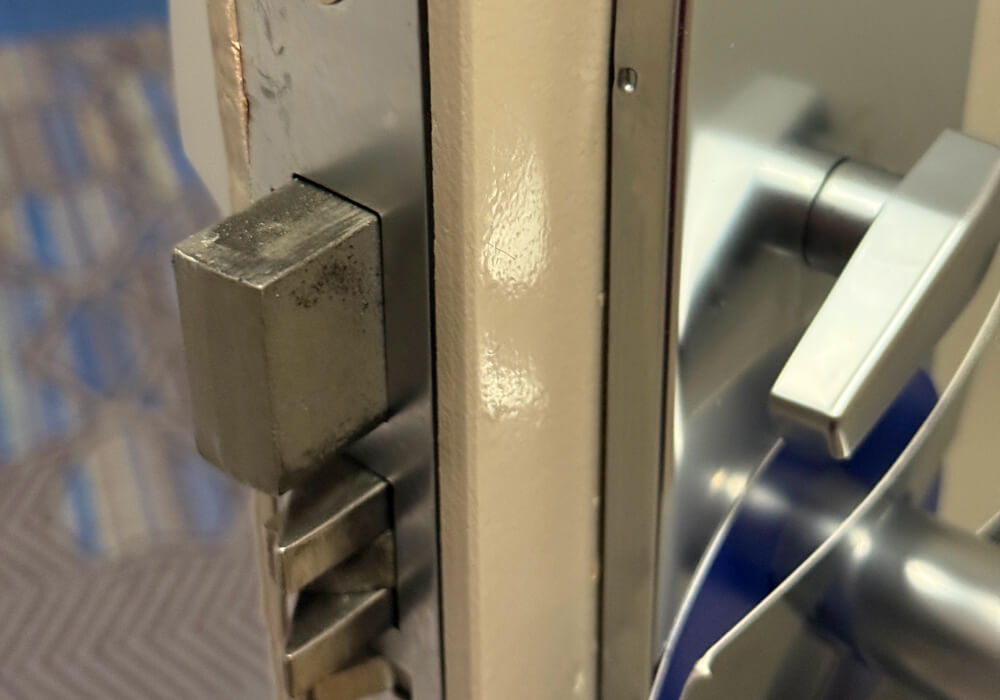
Test the deadbolt with the door standing open
Before adjusting the hinges or buying a new lock, open the door and extend the deadbolt with nothing in front of it. It takes a few seconds, and it separates a lock problem from an alignment problem, which are two completely different repairs. What the bolt does with nothing in front of it tells you which one you have:
- It extends fully and moves smoothly. That points away from an internal lock problem and toward the strike plate, hinges or door alignment.
- It is stiff, gritty or comes up short. The fault is inside the lock, and no amount of work on the hinges or the strike will change that.
- The key will not turn at all, or turns without moving anything. That is a different problem again, with its own causes, and this is what is usually wrong when a key will not turn in a front door lock.
Where the bolt goes when you lock the door
A deadbolt on a house door throws about an inch. It passes through the strike plate screwed to the jamb and into a box or a drilled pocket in the frame behind it. The pocket needs enough depth and clearance for the bolt to extend fully without rubbing. The strength comes from the bolt extending fully through a secure strike plate and into the pocket behind it.
Even so, the opening is not much wider than the bolt, which is why small movements cause so much trouble. An eighth of an inch anywhere in the door, the hinges or the frame is enough to bring the bolt down onto the lip of the plate instead of through the opening. Pushing or pulling the door flexes everything back into line for a moment, which is long enough for the bolt to find the hole. That pressure only moves the door into alignment for a moment. The underlying problem is still there.
It is also why the latch below the deadbolt usually carries on working perfectly. A latch has a short throw and a beveled face that lets it ride over the plate and drop in, and its hole is far more forgiving. The deadbolt has no tolerance to spare, so it fails first, and it is the part that tells you something has shifted.
Quick things to rule out before you blame the door
Sometimes the door has not moved at all. Before adjusting the hinges or frame, check for these smaller problems that can keep the bolt from entering the strike pocket:
- Something sitting in the strike pocket. Paint, a snapped screw, a piece of the frame or the tip of a long screw driven in from the other side of the jamb all take up room the bolt needs.
- A strike plate that has loosened. Once its two screws lose their grip, the plate itself can sit slightly proud or slide out of position, and the hole moves with it.
- The two long screws through the lock body. Overtightened, they can pinch the lock case enough to make the bolt drag. Backing them off slightly and trying again costs nothing.
- A storm door or security screen. Its frame is fixed to the same jamb, so one that has been fitted recently, or that has worked loose, can pull the strike side of the frame out of true.
When the door has dropped on its hinges
If the movement that makes it lock is upward, so that you find yourself lifting the handle or the edge of the door before the bolt will go, the hinges are the place to start. The top hinge carries most of the weight of the slab, and the screws supplied with door hardware are often short enough to bite into the jamb only rather than the framing behind it. Several signs point at this one:
- You lift rather than push or pull. Lifting takes the weight off the hinges for a second and brings the door back up to where it was hung.
- The gap along the lock side is uneven. It opens up at the top and closes toward the bottom, which is a door leaning away from its hinges.
- Hinge screws turn without ever tightening. The wood around them has softened and they are no longer holding anything.
- The scrape on the strike plate sits below the hole. The bolt has been arriving low, which is exactly what a dropped door does.
The repair is often simple. Go over all three hinges with a screwdriver, find the screws that spin, and replace at least one screw in the top hinge with a three inch screw that reaches through the jamb into the stud behind it. Plenty of doors lift straight back into line as that screw pulls tight, so try the bolt again before doing anything else.
When the door is not closing all the way
If the movement is inward, and you have to push the door toward the frame before the bolt will go, the door is not closing fully against the stop, so the bolt stops at the face of the strike plate instead of entering the opening. A few things hold a door out like this:
- Paint built up on the stop. Several repaints over the years add up, and the door is now closing against a thicker surface than the one it was fitted to.
- Weatherstripping that has been replaced or has swollen. Thicker stripping holds the door off the stop, and an eighth of an inch is the whole problem.
- A wood door that has taken up moisture. The slab swells, the edge starts rubbing the frame, and you can usually see the shiny worn patch where it touches.
- A slab that has warped. Doors that take direct sun for half the day are the usual candidates, and the top or bottom corner stands proud of the frame.
Doors that only do this at certain times of year
Wood takes up moisture and gives it back again, and frames move with the ground underneath them. Across much of Texas the clay soils swell through wet spells and shrink through dry ones, and a house sitting on them moves by small amounts as they do.
The pattern is what identifies it. The door locks perfectly for months, catches for a few weeks, then settles down on its own without anyone touching it. This does not necessarily mean anything has broken. If the alignment changes with the seasons, moving the strike plate during the worst spell may only solve the problem temporarily. These doors are worth having looked at during a quiet spell, when the alignment can be set properly rather than forced into working.
How to find out exactly where the bolt is landing
You can learn a great deal from where the bolt touches the strike plate. Before changing any hardware, use these four checks to narrow down whether the problem is the lock, the hinges or the door alignment:
- Mark the end of the bolt. Chalk, lipstick or a dab of grease, then close the door and turn the thumb turn until the bolt taps the strike. Open up and read where the mark landed on the plate.
- Look at the wear already there. A door that has been doing this for a while normally carries a bright scrape above or below the hole, which answers the question without any marking at all.
- Check the gap along the lock side. A gap that widens toward the top or bottom can show that the door is no longer sitting square in the frame.
- Compare it with the latch. A latch that still catches cleanly while the deadbolt misses tells you the movement is small, and small movements are usually hinges rather than frames.
What a partly seated deadbolt is actually holding
A deadbolt is strongest when the bolt extends fully through a secure strike plate and into the pocket behind it. Long screws that reach the framing behind the jamb help the strike resist force.
A bolt that has only caught the edge of the hole, or gone in halfway and stopped, can feel locked from the inside while holding a fraction of what it should. It is worth pushing the door with your hand before you leave the house or go to bed, rather than trusting how the thumb turn felt on the way past.
Do not start by filing the strike opening larger or moving the plate without first finding out why the bolt is missing. A small strike adjustment can be a proper repair when the door is stable, but the bolt must still extend fully and the strike must remain securely anchored. If the hinges, door or frame are still moving, enlarging the opening will only hide the cause.
When this stops being a job for a screwdriver
Some doors only need a loose hinge tightened or a longer hinge screw installed. Others have a frame or a slab that needs proper work, and buying new hardware for those is money spent on the wrong part of the door. Any of the following is a point to stop and have it looked at:
- The bolt is short or stiff with the door standing open. The lock itself has a fault, and the alignment is a separate question.
- Other doors in the house have started to stick, or cracks are running up from the corners of the frame. The movement is structural, and this door is simply where you noticed it.
- The strike has already been reset once and has drifted again. Something is still moving, and it will keep moving.
- It is a metal door and frame at a business. Those are heavier, they usually carry a closer, and the alignment work on them is a different job.
- The thumb turn has started to feel loose or gritty. That is wear from forcing, and it tends to get worse quickly once it starts.
If the deadbolt works properly but the handle turns without opening the door, that is the latch side of the same door, and here is what to check when the doorknob turns but the door will not open.
Get your door closing and locking properly again
A deadbolt that only catches when you hold the door is telling you something has shifted, and on most doors that is a repair rather than a replacement. Texas Premier Locksmith works on residential and commercial doors across Texas, checking the bolt, the strike, the hinges and the frame before anything comes off the door. Call (866) 948-8188 and we will get it locking cleanly again.
Written By
TPL
Texas Premier Locksmith Team
Texas Licensed Locksmith — License #B17236
Residential, commercial and automotive locksmith services across Texas. Call (866) 948-8188.
Key Won’t Turn in Your Front Door Lock? Here Is What Is Actually Wrong
Residential · BLOGKey Won't Turn in Your Front Door Lock? Here Is What Is Actually Wrong Texas Premier Locksmith Serving All of Texas Licensed & Insured, TX #B17236 All Makes & Models Mobile Service to Your Location Mon to Sat, 7am to 10pm [post_updated label="Last...
Doorknob Turns But the Door Won’t Open? Here Is What Has Failed
Residential · BLOGDoorknob Turns But the Door Won't Open? Here Is What Has Failed Texas Premier Locksmith Serving All of Texas Licensed & Insured, TX #B17236 All Makes & Models Mobile Service to Your Location Mon to Sat, 7am to 10pm [post_updated label="Last...
How to Stop Package Theft at Your Front Door
Residential · BLOGHow to Stop Package Theft at Your Front Door Texas Premier Locksmith Serving All of Texas Licensed, bonded & insured TX License #B17236 Mobile service across Texas Mon to Sat, 7am to 10pm Why...
The Best Smart Lock for Your Corpus Christi Airbnb
Residential · BLOGThe Best Smart Lock for Your Corpus Christi Airbnb Texas Premier Locksmith Serving All of Texas Licensed, bonded & insured TX License #B17236 Mobile service across Texas Mon to Sat, 7am to 10pm [post_updated label="Last Updated:" format="F j,...
Texas Premier Locksmith



Frequently Asked Questions

Will fitting a new deadbolt fix a door that only locks when I push it?
Usually not. A new deadbolt puts the same length of bolt in the same position in the door, so it arrives at the same hole and misses it in the same way. Replacing the lock only helps where the bolt itself is worn or no longer throws its full length, which you can check by turning it with the door open.
Is it safe to keep using a deadbolt that only locks when I hold the door?
It is secure while the bolt is genuinely all the way in, so push the door with your hand each time rather than going by how the thumb turn felt. The real risk is that the alignment keeps drifting until the bolt will not go in at all, usually on the day you are in a hurry.
Can a door that only locks when pushed be repaired, or does it need replacing?
Most of them are repaired. Tightening or lengthening hinge screws, clearing the strike pocket and resetting the plate to where the bolt now lands will handle the majority. Replacement comes into it when the slab is warped beyond adjustment or the frame itself has moved and needs work.