


Commercial Locksmith · Blog
An Employee Left With Your Business Keys: Do You Need to Rekey?
- Texas Premier Locksmith
- Serving All of Texas
 Licensed, bonded & insured
- TX License #B17236
- Mobile service across Texas
- Mon to Sat, 7am to 10pm
 Licensed, bonded & insured
Published On:October 20, 2026

When an employee leaves with a key to your business, the answer depends on a few things: which doors the key opened, how well you can account for every key, and how easily that key can be copied. A standard key that can’t be accounted for usually means a rekey. A restricted key that’s returned, with good records behind it, may mean nothing has to change.
Keys are also only part of it. The same person may know a door code, an alarm code, or the combination to a safe, and those need attention on the same day.
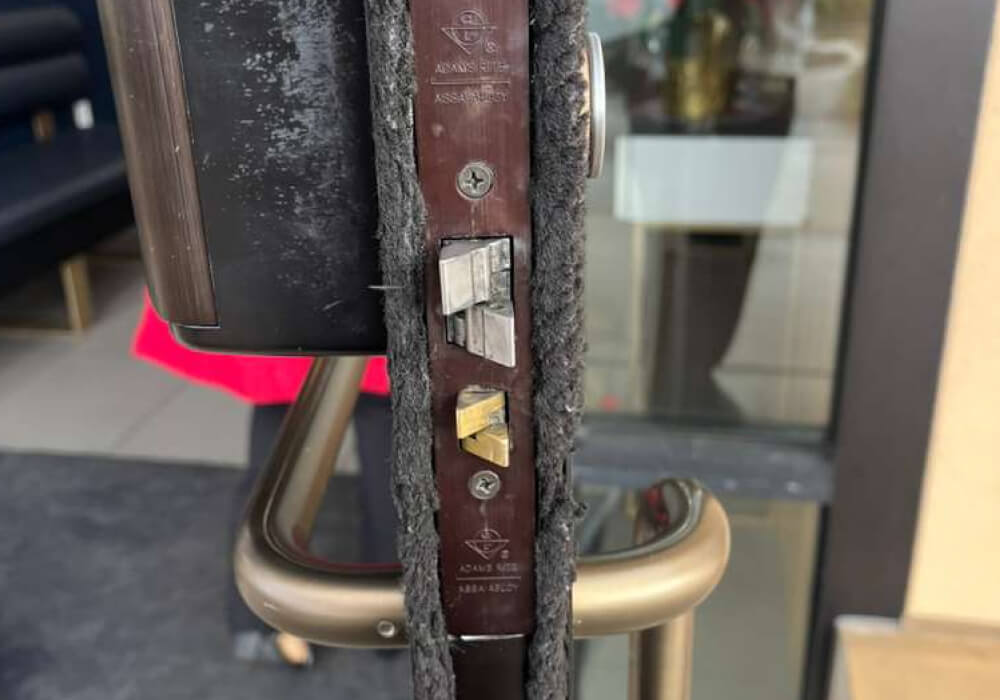
Which doors the former employee’s key opened
Start with what the key opened, because that decides how much work is needed. A key to one storeroom gives access to one room. A key to the front door, or one key that opened several doors, covers more of the building. Write down the following before you call anyone.
- Exterior doors: the front, the back, and any side or loading door the key worked on.
- Interior rooms: an office, a stockroom, or a room that holds records, cash or equipment.
- The type of key: a key for one door, or a master key that opened many.
- Who else carries the same key: those people may need new keys after a rekey.
Why getting a business key back doesn’t settle it
A returned key tells you where that one key is. It doesn’t tell you how many copies were made while the employee had it. A standard key can be copied at a hardware store or a self-service kiosk in a few minutes, usually with no question about who owns the lock.
A “Do Not Duplicate” stamp doesn’t change that. It’s a request printed on the key, and nothing about the key itself prevents a copy. Many shops and kiosks will cut one anyway.
How to find out if your business keys are restricted keys
A restricted key is one whose copies are controlled by the manufacturer’s program. Blanks go only to authorized dealers, and a copy usually needs approval from someone your business has named. The details vary by manufacturer. Some programs allow copies only from the original dealer, and others allow several dealers.
A number or a locksmith’s name stamped on the key doesn’t prove it’s restricted, and neither does buying your copies from one locksmith. A standard key can have both. These three checks are more reliable.
- The brand on the lock and key: it tells a locksmith which system you have.
- The paperwork: a restricted system usually comes with records that name who can authorize a copy.
- The servicing locksmith: the company that looks after the locks can confirm what restrictions apply today.
How to decide if a business needs to rekey after an employee leaves
The key count matters however the employee left. It’s more urgent if the employee refused to return keys, made threats, or has come back onto the property without permission. Check these four things before you decide.
- Missing keys: if a key wasn’t returned, someone outside the business holds a working key, and the doors it opened should be rekeyed.
- Key records: if you can’t say how many keys were issued, you can’t confirm that all of them came back.
- Copy controls: a standard key may have been copied, returned or not. A restricted key is much harder to copy, though it can still happen.
- Master key scope: a key that opened many doors exposes all of them.
If your keys are restricted, every issued key is back, your records are reliable, and nothing suggests misuse, it’s reasonable to leave the locks as they are. If any of those is in doubt, rekeying is the safer choice.
A rekey changes the pins inside the lock so the old key stops working, and the lock itself stays on the door. Our guide explains how rekeying differs from replacing a lock. In a simple setup, only the doors that key opened need to be done. In a master key system, the locksmith confirms which doors are affected from the keying records.
Expert Tip
If staff changes often, ask about interchangeable core locks. The core is the part of the lock the key goes into, and it can be taken out at the door with a control key and swapped for another. The replacement core has to be keyed differently, because putting back a core with the old keying lets the old keys work again. Keep the control key securely stored, because it can remove the cores it’s set up to operate.
What changes if the employee carried a master key
A master key opens every door in its group, so every door in that group is exposed. Rekeying a single door doesn’t solve it, because the master still opens the others.
In a master-keyed building the locks are set up to work together. Changing one without checking the rest can leave a door that the wrong key opens, or one that the right key no longer does. A locksmith needs to see how the system is laid out before saying what has to change. If you lease the space and the building controls the master key system, speak to the property manager before any lock is changed.
Our post on when a business should change its locks covers how master keys are tracked once the work is done.
What to do on the day an employee leaves with keys
Codes and cards can be shut off in minutes, while a rekey has to be arranged. Doing the quick things first removes some access right away. It doesn’t secure a door that the missing key still opens. If the rekey can’t happen right away, make an interim arrangement that suits the premises.
- Ask for every key, card and fob, and compare what comes back with what was issued.
- Remove the employee’s codes, cards and any administrator access.
- List the doors their key opened, and note if it was a master key.
- Decide if the locks need to be rekeyed.
- Write down what changed and who checked it: the updated key list, the doors affected, and the credentials removed.
Door codes, access cards and alarm codes to change when an employee leaves
Codes and cards are easy to forget, because there’s nothing physical to hand back. An employee who returned every key may still know a number that opens the door. Go through each of these.
- Shared keypad codes: change any shared code the employee knew or could have learned.
- Personal codes: delete the one assigned to that employee.
- Access cards and fobs: deactivate them in the system, even if they were returned.
- Phone credentials: remove the employee’s phone from any app that unlocks a door.
- Administrator access: remove their login to the app or portal that manages the doors, since someone with those permissions may be able to issue new credentials.
- Alarm codes: delete their code, and ask the alarm company to take them off the contact list.
Deleting a user in the software isn’t always the same as updating the door. Some locks aren’t connected to a network and have to be updated at the door itself. Where you still have the old card or know the old code, test it at each door to confirm it no longer works. Then check that current staff can still get in, so the change hasn’t locked out anyone who should have access.
Other locks a former employee may still be able to open
Smaller locks are often left out when a business thinks about its doors. Walk through the building and think about what this person opened in a normal week. A few of these may need a new combination or a new key.
- Safes: change the combination if they knew it.
- Key boxes: change the code on any lockbox that holds a spare key.
- Padlocks: gates, storage units and trailers often share one key or one combination.
- Cabinets and desks: file cabinets with records or cash drawers.
- Customer sites: if they carried keys to a client’s property, tell that client.
- Company vehicles: a key or fob that wasn’t returned still works. Our post on what a missing car key fob can still do explains how it’s removed from the vehicle.
How to avoid rekeying every time an employee leaves
A business with regular turnover can set its locks up so that each departure takes less work. These options can be used alone or together, and a locksmith can say which ones suit the doors you have.
- Restricted keys: copies are harder to make without your approval, so getting every key back gives you more confidence.
- Personal codes in place of shared ones: one person’s code is deleted and nobody else is affected.
- Cards or fobs on the busiest doors: a card is switched off in the system, and the lock doesn’t change.
- Access only to the doors each person needs: when ordinary staff don’t carry a master key, fewer doors need attention when an employee leaves.
Not Sure Who Still Has a Key to Your Business?
Texas Premier Locksmith rekeys commercial locks, sets up restricted keys, and works on master key systems for businesses across Texas. Tell us which doors the key opened and what kind of key it was, and we’ll go over what needs to change and what can stay.
Written By
TPL
Texas Premier Locksmith Team
Texas Licensed Locksmith — License #B17236
Our commercial team rekeys offices and storefronts, installs restricted and high security locks, and services master key systems across Texas. Getting a key back doesn’t always mean the door is secure again. We wrote this so a business owner can tell which situation they’re in before paying for work they may not need.
Car Key Fob Stolen? Does Reprogramming Stop It From Unlocking Your Car?
Automotive Locksmith · BlogCar Key Fob Stolen? Does Reprogramming Stop It From Unlocking Your Car? Texas Premier Locksmith Serving All of Texas Licensed, bonded & insured TX License #B17236 Mobile service across Texas Mon to Sat, 7am to 10pm [post_updated...
Why Does My Deadbolt Only Lock When I Push or Pull the Door?
Residential · BLOGWhy Does My Deadbolt Only Lock When I Push or Pull the Door? Texas Premier Locksmith Serving All of Texas Licensed & Insured, TX #B17236 All Makes & Models Mobile Service to Your Location Mon to Sat, 7am to 10pm [post_updated label="Last...
Key Won’t Turn in Your Front Door Lock? Here Is What Is Actually Wrong
Residential · BLOGKey Won't Turn in Your Front Door Lock? Here Is What Is Actually Wrong Texas Premier Locksmith Serving All of Texas Licensed & Insured, TX #B17236 All Makes & Models Mobile Service to Your Location Mon to Sat, 7am to 10pm [post_updated label="Last...
Doorknob Turns But the Door Won’t Open? Here Is What Has Failed
Residential · BLOGDoorknob Turns But the Door Won't Open? Here Is What Has Failed Texas Premier Locksmith Serving All of Texas Licensed & Insured, TX #B17236 All Makes & Models Mobile Service to Your Location Mon to Sat, 7am to 10pm [post_updated label="Last...
Texas Premier Locksmith



Frequently Asked Questions

How soon after an employee leaves should locks be rekeyed?
As close to the departure as you can manage. Until the lock is rekeyed, any copy of the old key still opens the door. If the departure is planned, the work can be arranged for the last day.
Can my other employees keep their keys after a rekey?
It depends on which keys are being changed. On a door where everyone shares one key, the rekey stops that key and each person needs a new one. In a master key system, one person’s key can sometimes be replaced while the master key stays in use. Ask the locksmith to confirm which existing keys will keep working.
Do I need to rekey if the employee only had a key to one office?
Only that door needs to be rekeyed. The exterior doors aren’t affected if the key never opened them. Confirm first that it wasn’t a master key, because a master key opens other doors as well.
Should I rekey if a current employee lost a key?
The reasoning is the same. A lost standard key is a working key you can’t account for. It matters more if it was lost with something that names the business, like a badge or a uniform.