

Residential Locksmith · Blog
How Much Does it Cost for a Locksmith to
Rekey Your House?
- Texas Premier Locksmith
- Serving All of Texas
 Licensed & Insured
- Mobile Service to Your Location
- All Major Lock Brands
- Statewide Texas Coverage
 Licensed & Insured
Published On:December 14, 2020

Last Updated:
Getting the keys to your home raises a question most people do not ask until later: who else still has a copy of them?
You may have just moved into a new house, or had a tenant move out, or lost a set of keys and never found them. Different situations, and the same worry underneath: who still has a key.
Rekeying is the usual answer, and it costs less than most people expect to pay.
Pricing Overview
Quick Answer: What Does Rekeying a House Actually Cost?
If you are looking for a fast estimate before reading further:
Residential Rekeying
Typical Rekeying Costs in Texas
Rekeying cost per lock cylinder
Average cost for a full home
Final cost depends on number of locks, lock type, and service conditions
Compared to full lock replacement, rekeying costs a fraction of the price because the existing hardware stays in place.
Do you need to change your home locks? Lock replacement is a great option if you are looking to replace old and worn-out locks and upgrade to smart locks or other keyless options. However, lock rekeying can be a better option in some scenarios, both in terms of price and effort.
If your locks are in good physical and functional condition, changing them is rarely worth the price unless you want to upgrade.
Understanding Your Options
What Is the Difference Between Rekeying and Replacing Your Locks?
These two terms get used interchangeably but they are very different jobs.
Replacing locks. This procedure involves changing out the hardware of the lock itself, such as the deadbolt or doorknob lock. The locking mechanism will be completely replaced with a new one.
Replacing your locks may be necessary if one is broken or old and becoming difficult to maneuver. A lock that is already worn or damaged is a replacement job, not a rekeying job. You may also replace your locks with more secure locks if you are concerned about a break-in.
Rekeying locks. Instead of replacing the lock completely, rekeying simply changes the tumblers inside of the lock so that a new key is required and the old key no longer works.
You may want to rekey your locks if you want the old key to stop working, such as in the case of a break-up or divorce, an eviction, or the termination of an employee. Lock rekeying is also a great idea if you are moving to a new house, especially if the locks are in good shape.
Rekeying your locks has one major advantage over replacing your locks: it costs less. How much does it cost for a locksmith to rekey your house, and how does that compare with what a locksmith charges to replace them?
What’s the Difference?
Lock Rekeying vs Lock Replacement: Cost & When to Choose Each
- Existing lock hardware stays in place
- Only the internal key pins are changed
- Old keys stop working once the pins change
- Done in 10–15 minutes per lock
- Lock must be in good working condition
- Entire lock mechanism is brand new
- Upgrade to a higher security grade
- Option to go keyless or smart lock
- Costs more, parts and labor
- Takes longer, 30 to 60 min per lock
Not sure which you need? Call us and we’ll assess your locks and give you an honest recommendation before any work begins.
Cost Breakdown
What Does a Locksmith Charge to Rekey Your Locks?
Rekeying can be as low as $20 per cylinder. The cost per home can range from $100-$200 depending on how many locking doors you have. Because the hardware doesn’t have to be replaced, the cost is much lower than replacing locks and deadbolts.
A few things affect where your total lands within that range.
1
Number of Locks
A typical single-family home has between three and six lockable entry points. Front door, back door, garage entry, and sometimes a side gate or secondary entrance. Each cylinder is priced separately, so the more locks you have, the higher the total.
2
Lock Brand and Type
Standard locks from common brands are quick to rekey and priced at the low end. High-security locks, some smart lock cylinders, and older or unusual hardware may take more time and require specific pins or tools, which can add to the cost.
3
Service Call Fee
Most locksmiths charge a base fee to come out to your location before any work begins. This typically ranges from $25 to $50 depending on the company and your location, and it is separate from the per-cylinder cost.
4
Time of Day
Standard appointments during business hours carry standard rates. After-hours calls, weekends, and holidays typically carry a higher service fee.
5
Your Location
Urban areas tend to have higher locksmith rates. Remote or rural locations may carry a travel surcharge on top of the base service charge.
What Does It Cost to Replace Your Locks Instead?
Lock installation ranges anywhere from $85-$100 per hour. Depending on how long it takes to replace all of your locks, the cost can go up quickly. Replacing your locks yourself could save you money, but may not be as secure as having the job done by a professional locksmith.
To put that in perspective: if a locksmith spends two to three hours replacing all the locks on a typical home, you are looking at $170 to $300 in labor alone, before the cost of new hardware. Quality deadbolts and locksets range from $30 to $150 each, or more for high-security options. On a home with five entry points, total replacement costs can easily reach $400 to $600 or beyond.
Rekeying the same home at $20 to $30 per cylinder plus a service call fee typically comes in between $120 and $200. When the existing hardware is still in good shape, the savings are hard to argue with.
Need a Rekeying Quote in Texas?
Our licensed technicians serve homeowners across Texas. Call us and we will walk you through your options before dispatching anyone.
Know When to Rekey
When Should You Rekey Your House?
Rekeying is not just about cost savings. It is about control over who has access to your home. Here are the most common situations where it makes the most sense.
- You just moved into a new home. This is the single most common reason people call for rekeying. When you move into a property, you have no way of knowing how many copies of the keys exist or who still has them. Previous owners, real estate agents, contractors, and neighbors may all have had a copy at some point. Rekeying as soon as you take possession costs a fraction of the price of full replacement and settles the question.
- You lost your keys. If your keys are genuinely lost rather than stolen, rekeying is usually enough. It makes the missing keys useless without requiring new hardware.
- A roommate or tenant moved out. Whether the departure was amicable or not, any time someone who had a key leaves, rekeying is worth doing. You cannot always be certain copies were not made.
- An employee was let go. For homeowners who employ housekeepers, caregivers, or contractors with regular access, rekeying after that relationship ends is quick and costs little.
- A relationship ended. In the case of a divorce, breakup, or any situation where someone with a key is no longer welcome, rekeying is often one of the first calls people make.
Know When to Replace
When Should You Replace Your Locks Instead?
Replacement makes more sense in these situations.
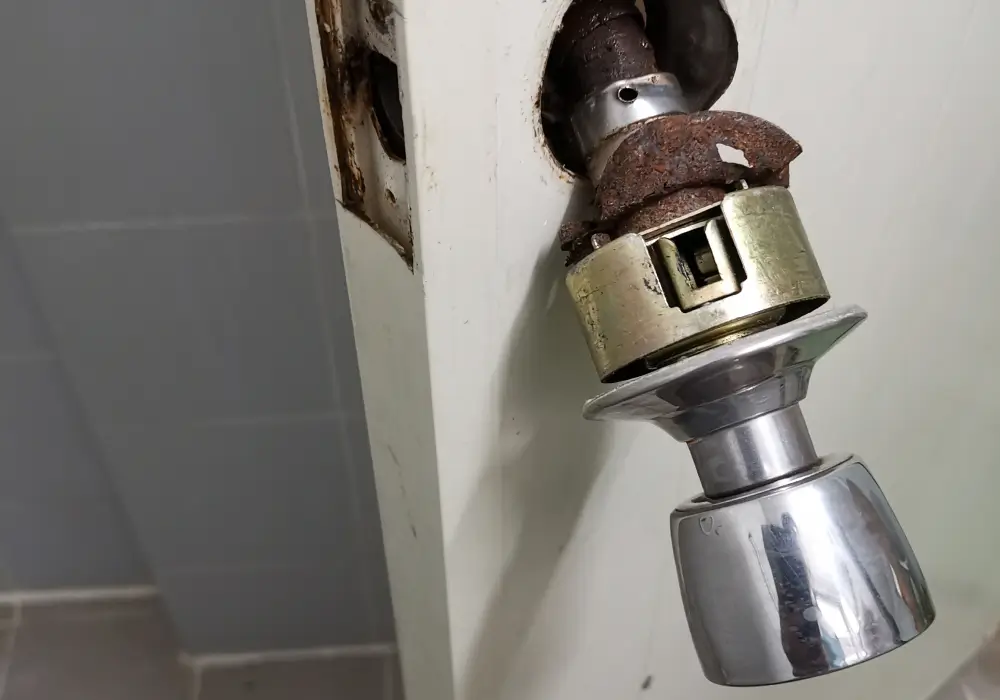
- The lock is physically damaged or worn and difficult to operate. A lock that sticks, spins, or does not turn smoothly is a security risk regardless of who has the key. Rekeying a damaged lock does not fix the underlying problem.
- You want to upgrade. If you are moving from a basic doorknob lock to a deadbolt, switching to a high-security option, or installing a smart lock or keyless entry system, replacement is necessary because you are changing the hardware entirely.
- The lock has been tampered with. If your home was broken into and the lock was forced, replacement is the safer choice even if the lock appears to still function.
The Process Explained
How Does the Rekeying Process Actually Work?
Most people have never watched a rekeying job, so here is what happens when the technician arrives.
The locksmith removes the lock cylinder from the door hardware. This takes only a few minutes and does not damage the lock or the door. Once the cylinder is out, the existing key pins are removed. These small pins are what determine which key the lock responds to. New pins matched to the new key are inserted, the cylinder is reassembled, reinstalled in the door, and tested. The locksmith verifies the new key works correctly before moving to the next lock.
A single lock typically takes ten to twenty minutes. A full home with five or six locks is usually done within an hour or two.
One Thing Worth Knowing
When a locksmith rekeys several locks in the same visit and the cylinders are compatible, they can be matched to one key. It is worth asking about while the technician is there, because mixed brands on one house sometimes cannot be matched without changing hardware.
The One Thing Most People Forget to Ask Their Locksmith
When a locksmith rekeys your home, ask them to assess the condition of each lock while they have the cylinder out. A lock that feels fine from the outside can have worn internal components that a trained eye will catch immediately. Pins that are close to failing, worn springs, or a cylinder that is starting to show corrosion are all things that are invisible until the lock is open on a workbench.
It takes an extra minute per lock and costs nothing to ask, and it tells you which locks are worth replacing now rather than next year.
Should You Rekey or Upgrade to Smart Locks?
Keyless entry has come down in price, so this question comes up more often than it used to. If you are already calling a locksmith after a move or a change in who has access, is it worth upgrading at the same time?
For some homeowners, yes. Smart locks remove the key problem entirely. There are no copies to worry about, no keys to lose, and access can be changed or revoked through an app without any physical work. If you keep losing keys, or several people need access at different times, a keypad or app removes the key from the problem entirely.
The tradeoff is cost. A quality smart lock runs $100 to $300 or more for the hardware alone, plus installation. For a home with multiple entry points, a full upgrade is a meaningful investment compared to rekeying.
Ask the locksmith which makes sense for the doors you actually use, and get the price for both before deciding.
Written By
TPL
Texas Premier Locksmith Team
Texas Licensed Locksmith, License #B17236
The Texas Premier Locksmith team consists of licensed technicians with real experience handling lockouts, key replacements, and security upgrades across Texas. Our content is based on actual service scenarios, helping customers understand costs, processes, and what to expect before calling a locksmith.
Texas Premier Locksmith is a licensed locksmith company in Texas (License #B17236) serving customers since 2011.
Get a Rekeying Price for Your Home in Texas
Looking for a locksmith to rekey your home locks? Texas Premier Locksmith covers residential rekeying services across Texas. We can send a locksmith out to rekey your locks for less than the price of replacing them, as long as they are in good condition and working properly.
Car Key Fob Stolen? Does Reprogramming Stop It From Unlocking Your Car?
Automotive Locksmith · BlogCar Key Fob Stolen? Does Reprogramming Stop It From Unlocking Your Car? Texas Premier Locksmith Serving All of Texas Licensed, bonded & insured TX License #B17236 Mobile service across Texas Mon to Sat, 7am to 10pm [post_updated...
Why Does My Deadbolt Only Lock When I Push or Pull the Door?
Residential · BLOGWhy Does My Deadbolt Only Lock When I Push or Pull the Door? Texas Premier Locksmith Serving All of Texas Licensed & Insured, TX #B17236 All Makes & Models Mobile Service to Your Location Mon to Sat, 7am to 10pm [post_updated label="Last...
Key Won’t Turn in Your Front Door Lock? Here Is What Is Actually Wrong
Residential · BLOGKey Won't Turn in Your Front Door Lock? Here Is What Is Actually Wrong Texas Premier Locksmith Serving All of Texas Licensed & Insured, TX #B17236 All Makes & Models Mobile Service to Your Location Mon to Sat, 7am to 10pm [post_updated label="Last...
Doorknob Turns But the Door Won’t Open? Here Is What Has Failed
Residential · BLOGDoorknob Turns But the Door Won't Open? Here Is What Has Failed Texas Premier Locksmith Serving All of Texas Licensed & Insured, TX #B17236 All Makes & Models Mobile Service to Your Location Mon to Sat, 7am to 10pm [post_updated label="Last...
Texas Premier Locksmith



Frequently Asked Questions
Lock Rekeying vs Lock Replacement in Texas
Should I rekey my locks after buying a house in Texas?
Yes, and sooner rather than later. You have no idea how many copies of those keys are floating around or who has them. Previous owners, contractors, neighbors, real estate agents, any of them could have a copy. If the locks are in decent shape, rekeying before you move in is the quickest and cheapest way to make the home actually yours.
Is rekeying as secure as replacing locks?
Yes, as long as the lock itself is in good shape. People assume new automatically means safer, but that is not how it works. A solid deadbolt that has been rekeyed by a professional is just as effective as one fresh out of the box. The quality of the hardware is what matters, not how recently it was installed.
What happens to my old keys after rekeying?
They stop working. Once the pins inside the lock are changed, an old copy will not turn it. Whether you lost your keys, a tenant moved out, or you just want a clean slate, rekeying cuts off access for everyone who had it before.
Is it cheaper to take the lock to the locksmith than have them come out?
Sometimes. Removing the cylinder yourself and bringing it in saves the service call fee, and some shops charge less per cylinder over the counter. It only works if you can get the cylinder out without damaging the door hardware, and your door has no lock on it until you bring it back. For more than one or two locks, having the technician come to you usually works out better.