


Residential and Commercial · Blog
Why Won't My Safe Open With the Correct Combination?
- Texas Premier Locksmith
- Serving All of Texas
 Licensed, bonded & insured
- TX License #B17236
- Mobile service across Texas
- Mon to Sat, 7am to 10pm
 Licensed, bonded & insured
Published On:November 27, 2026

You know the combination. You've dialed it every morning for years, or it's in the same notebook it has always been in. Maybe it's the gun safe in the bedroom closet you haven't opened since last season. At a business, it's often the store manager at closing time, dialing the office safe for the third time with the day's cash still on the desk. The numbers are right, and the handle still won't turn.
This article is about safes with a spinning dial. Keypad safes fail for different reasons, such as batteries and wiring, so the advice here won't match them. When a dial safe refuses a combination you're sure of, either something went wrong in the dialing, or something about the lock or the safe has changed. Rule out the dialing first, because forcing a safe that only needed careful dialing can damage the lock.
Start by Checking How You're Dialing
A dial lock is less forgiving than people expect. Inside are wheels that each have to line up exactly before the bolt can move, so a small slip on any number undoes the whole sequence. Before you dial, make sure the handle is in its closed position, and don't hold any pressure on it while you turn the dial. Try the handle only after the last number.
Many three-number dial locks open with the pattern below, where left means counterclockwise and right means clockwise. Other locks, including most with four-number combinations, use a different sequence, so check the manual or the manufacturer's website for your model if this one doesn't match:
- First number: Turn the dial left. Count each time the first number passes the mark, and stop on it the fourth time.
- Second number: Turn right and stop on the second number the third time it reaches the mark.
- Third number: Turn left and stop on the third number the second time.
- Opening: Turn right slowly until the dial stops. That stop is the bolt pulling back, and it's the point where the handle should turn.
Most dialing problems come down to three mistakes, and all three are easy to make on a dial you don't use often. Go through them before you assume anything inside the safe has failed:
- Turning back after overshooting: A dial lock doesn't accept corrections. If you pass a number, start the whole sequence again from the beginning.
- Reading the dial from an angle: Look at the dial straight on, because from the side it's easy to stop one number early or late.
- Using the wrong mark: Many safe dials have two marks on the ring around the dial. The one at the top is the opening mark. The one off to the side is a change mark, used only when someone sets a new combination, and dialing your numbers to it will never open the safe.
Why a Safe Won't Open When the Combination Is Right
If you've dialed slowly, from the start, to the right mark, and the safe still won't open, the cause is somewhere in the safe itself. What you notice when you dial and turn the handle usually points to which one it is. These are the situations we run into most often:
- Everything feels normal, but the safe stays shut: Check whether the safe has a small key lock in the dial or the handle. Many home and fire safes do, and if it's set to locked, the safe won't open even with the right combination. Our guide to the type of lock your safe has explains the common setups. Also make sure nobody has changed the combination, and that the numbers you have were written down correctly.
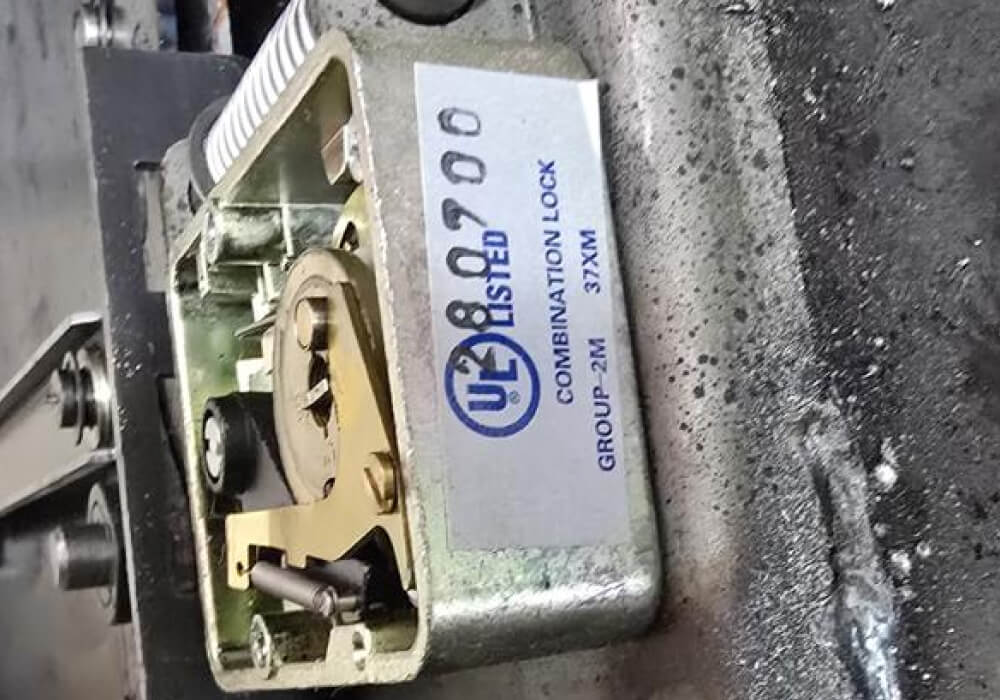
- The dial feels rough, loose or different: A dial that spins too freely, scrapes or feels gritty points to wear, dirt or, in a humid garage, rust inside the lock. On some safes, the ring with the opening mark can work loose and shift, so you dial perfectly to a mark that's no longer in the right spot. Stop dialing and tell the technician what changed.
- The dial reaches its usual stop, but the handle won't move: The lock and the bolts are two separate parts. The lock may have released while the bolts are pressed against the frame by heavy contents or a slammed door. Light pressure on the door while you turn the handle sometimes frees them. Never force the handle.
- It opens sometimes, or only after several tries: After years of use, the parts inside the lock wear, and the numbers can shift slightly from where they used to sit. This is called drift, and it shows up most on safes that are dialed often, like store and office safes.
- The handle turns, but the door stays shut: Something between the handle and the bolts isn't connecting. This needs a technician to look at it.
- The trouble started after the safe was moved, dropped or tampered with: Many safes have a backup locking device, called a relocker, that can engage after a hard knock or an attack on the lock. If anything like that happened, mention it when you call.
Quick Answer
If your safe won't open with the correct combination, dial again slowly from the beginning, stop exactly on each number without turning back, and use the opening mark at the top of the dial. Check for a key lock on the dial or handle. If the dial feels rough, or the handle won't move even after the dial stops, stop trying and call a safe technician.
What You Can Safely Try Before You Call
Give yourself a few careful attempts. Dial slowly, and start each one by spinning the dial a few full turns to clear the wheels. If someone else knows the combination, let them try too. Everyone dials a little differently, and if it opens for them, that tells you the lock still works.
It's tempting to keep going, especially with something important inside, but more attempts rarely help once the first few careful ones haven't worked. Don't put a wrench or a bar on the handle, and don't spray lubricant into the dial, tap the door with a hammer or try drilling it yourself. A forced handle can break the parts that connect it to the bolts, and each of the others can turn a simple opening into a repair.
If the safe opens after a struggle, leave it open and arrange service before you lock it again. A lock that was hard to open once can fail completely the next time.
Expert Tip
If you rarely open your safe, open it every few months anyway, even when you don't need anything inside. You'll notice early if the dial feels rough or the combination takes more than one try, while the safe still opens.
When to Call a Safe Technician
Call for help if the dial spins without ever stopping, if the handle turns but the door won't move, or if you've dialed carefully several times without success.
A safe technician starts with the least damaging option. For a worn lock, that often means working the combination methodically to find where the numbers have drifted to. If the lock has failed, a small, precise drill hole may be needed to reach it, and the safe is repaired afterward. A worn lock can usually be replaced without replacing the safe. The cost depends on the safe and the lock, and our breakdown of what a locksmith charges to open a safe explains what goes into the price. If the combination is truly gone rather than drifted, that's a different problem, and our guide on forgetting the code to your safe covers what to do.
If you need a locksmith in Dallas for a safe that won't open, our technicians come to you at home or at work.
Dialing the Right Combination and Still Locked Out?
Our safe technicians try non-destructive methods first on mechanical dial safes, and service the lock so it works properly afterward. Tell us the make of the safe and what the dial and handle are doing, and we'll let you know what to expect before we arrive.
Written By
TPL
Texas Premier Locksmith Team
Texas Licensed Locksmith — License #B17236
Our safe team handles lockouts, combination changes and lock servicing on home safes, gun safes and business safes. We write about the jobs we handle so safe owners know what to try first and when to stop.
Related Articles
Texas Premier Locksmith



Frequently Asked Questions

Should I spray WD-40 or another lubricant into the dial?
No. Spray lubricants collect dust inside the lock and can gum up the wheels, which makes drift and sticking worse.
Why does my safe open on the second or third try but not the first?
Either a small dialing habit, like stopping a hair short, is creeping in, or the lock has started to drift and only opens when your dialing happens to land just right. If it keeps happening after you slow down, have the lock checked.