


House Door Lock Not Working? Common Reasons and How to Fix Them
- Texas Premier Locksmith
- Serving All of Texas
 Licensed, bonded & insured
- TX License #B17236
- Mobile service across Texas
- Mon to Sat, 7am to 10pm
 Licensed, bonded & insured
Published On:February 25, 2019

Last Updated:
A door lock can fail in small, confusing ways before it fails completely. The key may go in but refuse to turn. It may turn too far and do nothing. The deadbolt may stop halfway, or the latch may miss the frame so the door will not stay shut. To the person standing at the door, all of these feel like “the lock is broken,” but they do not have the same cause.
The quickest way to understand the problem is to pay attention to what the lock is doing right now. This guide is arranged by symptom, so you can find the section that matches your door, see what is safe to try, and know when it is time to stop before a small problem becomes a broken key or a stuck door.
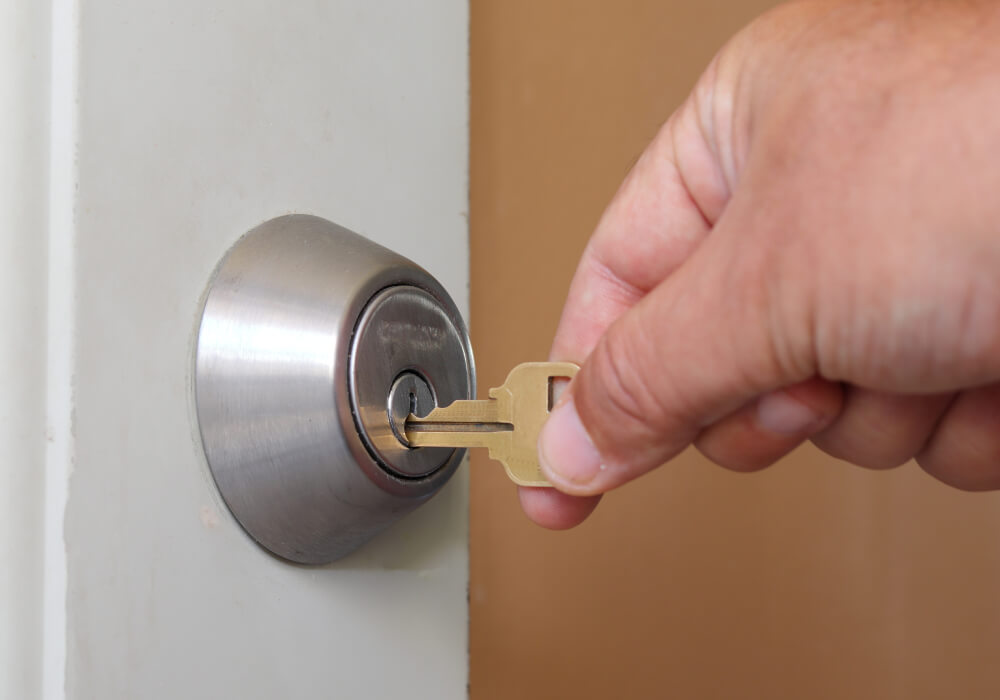
Start with one test: is it the lock or the door?
Open the door and work the lock while the door is standing open. Turn the key, and turn the thumb turn on the inside. If everything moves smoothly with the door open, the lock is fine and the door or frame is the problem. If it is still stiff or stuck, the fault is inside the lock.
That quick test tells you whether to look at the door or the lock first. Most of these problems are simpler than they feel when you are standing at the door.
The key will not go into the lock
When the key stops partway, something may be blocking the keyhole. Look into it with a flashlight. You may see dirt, a piece of a broken key, or something a child has pushed in.
Check the key too. If it is a new copy that has never worked well, it was probably cut badly. Try the original key. If that one slides in, have a fresh copy made from it.
The key goes in, but feels rough or scratchy
If the key goes in but feels rough, dirty or scratchy, do not force it. Compare it with another key if you have one. If both keys feel rough, the cylinder may be dry or dirty. A small amount of dry lock lubricant can help. Do not use cooking oil or grease, because they collect dust and make the lock worse over time.
The key goes in but will not turn
One common cause is a worn key. Keys are made of soft metal, and after years of use the edges round off until they no longer lift the pins inside the lock to the right height. Try your spare key first. If the spare works, you only need a new key and not a new lock.
We go through every cause in our guide on a key that will not turn in the door lock.
The key turns, but nothing happens
If the key spins freely and the bolt stays where it is, a part inside has broken or come loose. A small metal piece connects the key cylinder to the bolt. When it snaps or slips out of place, the key no longer moves anything.
This one is not a home repair. The lock has to be taken apart, and the door may be stuck locked. Call a locksmith, and do not slam or force the door while you wait.
The lock works from one side but not the other
If the key works from the outside but the thumb turn is stiff inside, or the inside works but the key side does not, the problem is usually in one half of the lock. It may be a worn cylinder, a loose connecting piece inside, or a lock that was installed slightly out of line. This is a good point to stop and call a locksmith, especially on an exterior door.
The key is stuck and will not come out
A key usually comes out only when it is straight up and down, the same position it went in. Turn it gently back to that position, then pull. If it still will not move, press a finger against the round face of the lock, right beside the key, and pull again. Sometimes the face of the lock has worked loose and is moving with the key.
Do not pull hard or use pliers. A key that snaps leaves half of itself inside the lock.
The key has broken off in the lock
If part of the key is still sticking out, you may be able to grip it and draw it straight out. If it has broken off level with the lock, leave it alone. Pushing another key or a tool into the keyhole drives the piece deeper. Our guide on removing a broken key explains what works and what makes it worse.
The deadbolt will not go all the way across
If you have to lean on the door, lift the handle or pull the door toward you to lock the deadbolt, the lock is rarely to blame. The door has moved, and the bolt is hitting the edge of the hole in the frame. We explain how to find exactly where it is rubbing in our guide on a deadbolt that only locks when you push the door.
The door will not latch or stay shut
A door that swings back open has a latch that is missing its hole in the frame. A common cause is a loose hinge, which lets the door drop a little on the handle side. Open the door and tighten the hinge screws, starting with the top hinge.
If a screw turns without tightening, the wood behind it is worn. A longer screw that reaches the wall stud behind the frame often pulls the door back into line.
The knob or handle turns, but the door will not open
When the handle moves and the latch stays put, the link between them has failed inside the door. Sometimes the handle has only come loose on its shaft. Look for two screws on the inside plate, or a small set screw on the neck of the knob, and tighten them.
We cover this in detail in our guide on a doorknob that turns but the door will not open.
The lock sticks at certain times of day or year
A lock that works in the morning and sticks later in the day is often reacting to heat and humidity. Wood swells as the day warms up and the air gets damp, and the door shifts just enough for the bolt to bind.
Because the lock is not at fault, oiling it will not help. The fix is usually a small adjustment where the latch or bolt enters the frame.
The lock stopped working after painting or a new installation
Fresh paint is a frequent cause. Paint on the edge of the door can hold the latch in place, and paint in the frame fills the hole the bolt needs. Scrape it away carefully and the lock usually works again.
A newly installed lock that feels stiff has often been screwed on too tightly. If the two long screws that hold the lock together are overtightened, they squeeze the mechanism and the bolt drags. Loosen each one a quarter turn and try again.
The keypad or smart lock has stopped responding
An electronic lock that goes dead has usually run out of battery. Replace all the batteries together with fresh ones from the same pack. Codes, apps and connection faults are covered in our guide to common issues with electronic locks.
Expert Tip
Keep one spare key that is never used, and treat it as your master copy. Have all new keys cut from that one. A copy made from a worn key copies the wear too, and after two or three copies of copies the new key will not work in the lock.
What you can fix yourself and what to leave alone
Many lock problems are really door problems, and those are often within reach of a careful homeowner. Repairs inside the lock are different, because the parts are small and easy to damage. Use this list as a guide to which is which:
- Tightening hinge and handle screws: a safe job for anyone with a screwdriver.
- Replacing batteries: safe, and worth doing once a year before they fail.
- Scraping away paint: safe if you work slowly with a small blade.
- Using a dry lock lubricant: safe in a small amount.
- Taking the lock apart: leave this to a locksmith, since the springs and pins are easy to lose.
When the lock itself is worn out
Sometimes there is nothing to adjust. A lock that has been used several times a day for fifteen or twenty years may simply be worn, and it will keep failing in new ways. If you have fixed it twice and it is stiff again, it may be time to replace your locks.
Texas Premier Locksmith repairs and replaces door locks for homeowners across Texas, including through our locksmith in Dallas.
Is your door lock still giving you trouble?
Call Texas Premier Locksmith at (866) 948-8188 and tell us what the key and the door are doing. A licensed locksmith will come to your home, find the cause, and tell you whether it needs a repair, a rekey or a new lock.
Written By
TPL
Texas Premier Locksmith Team
Texas Licensed Locksmith — License #B17236
Residential, commercial and automotive locksmith services across Texas. Call (866) 948-8188.
An Employee Left With Your Business Keys: Do You Need to Rekey?
Commercial Locksmith · Blog An Employee Left With Your Business Keys: Do You Need to Rekey? Texas Premier Locksmith Serving All of Texas Licensed, bonded & insured TX License #B17236 Mobile service across Texas Mon to Sat, 7am to 10pm [post_updated label="Last...
Car Key Fob Stolen? Does Reprogramming Stop It From Unlocking Your Car?
Automotive Locksmith · BlogCar Key Fob Stolen? Does Reprogramming Stop It From Unlocking Your Car? Texas Premier Locksmith Serving All of Texas Licensed, bonded & insured TX License #B17236 Mobile service across Texas Mon to Sat, 7am to 10pm [post_updated...
Why Does My Deadbolt Only Lock When I Push or Pull the Door?
Residential · BLOGWhy Does My Deadbolt Only Lock When I Push or Pull the Door? Texas Premier Locksmith Serving All of Texas Licensed & Insured, TX #B17236 All Makes & Models Mobile Service to Your Location Mon to Sat, 7am to 10pm [post_updated label="Last...
Key Won’t Turn in Your Front Door Lock? Here Is What Is Actually Wrong
Residential · BLOGKey Won't Turn in Your Front Door Lock? Here Is What Is Actually Wrong Texas Premier Locksmith Serving All of Texas Licensed & Insured, TX #B17236 All Makes & Models Mobile Service to Your Location Mon to Sat, 7am to 10pm [post_updated label="Last...
Texas Premier Locksmith



Frequently Asked Questions

Is a lock that sticks a security risk?
It can be. A deadbolt that does not go fully into the frame is much easier to force than one that does. A sticking lock also tempts people to leave the door unlocked for short trips. It is worth fixing soon for both reasons.
Can a locksmith fix a door lock without replacing it?
Usually, yes. Many visits end with an adjustment to the door or frame, a cleaned and serviced lock, or a rekey. Replacement is only needed when the lock is worn out, damaged or no longer strong enough for the door.