


Residential Locksmith · Blog
What to Do After a Burglary: 5 Steps to Take Right Away
- Texas Premier Locksmith
- Serving All of Texas
 Licensed, bonded & insured
- TX License #B17236
- Mobile service across Texas
- Mon to Sat, 7am to 10pm
 Licensed, bonded & insured
Published On:September 7, 2017

Last Updated:
You come home and the front door is not closed the way you left it. Or a back window is broken, and a drawer you never leave open is hanging out. It takes a moment to understand what you are looking at.
What you do in the next few hours matters. It affects whether the police can collect evidence, how smoothly your insurance claim goes, and how quickly your home can be made safe to sleep in again. The five steps below are in the order you should do them. After the steps, you will find what to do about your locks, and what changes if the burglar tried to get in and failed.
Step 1. Stay outside and call the police
If you see signs of a break-in before you go in, do not go in. You cannot tell from the doorway whether someone is still inside. Go to your car or a neighbor's house and call from there.
If there is any chance someone is still in the house, call 911. If you are certain the house is empty, the police non-emergency number is also an option, but use 911 when you are in doubt. If you only noticed the break-in after you were already inside, leave and make the call from outside.
If you have pets, tell the officer before anyone goes in. An open door can mean a missing pet.
Step 2. Do not touch or clean anything yet
It is natural to want to close the drawers and sweep up the glass. Wait until the police have finished, because they may want to look for fingerprints or marks on anything the burglar handled. Until an officer tells you they are done, leave these alone:
- The door or window that was forced: the lock, the handle, the frame and any broken glass can all carry evidence.
- Anything that was moved or opened: drawers, cabinets, jewelry boxes and closets should stay as you found them.
- Things left behind: a tool, a glove or a bag that is not yours should not be picked up.
Ask the officer for the report number before they leave. You will need it for your insurance claim, and for your bank if cards or checks were taken.
Step 3. Photograph the damage and list what is missing
Once the police have finished, take photos and video before anything is repaired or tidied. Go through every room, and take close pictures of the door or window that was used to get in. Photograph the mess as well, because it shows what was searched.
Then start a list of what is missing. Add the brand, model and serial number where you have them, and look for receipts, bank statements or old photos that show you owned each item. The list will grow over the next few days as you notice more, and that is normal. Tell the police straight away if a firearm or prescription medication was taken, because they will want those details.
Expert Tip
Take your photos of the damaged lock, door and frame before a locksmith or anyone else repairs them. After the repair, that evidence no longer exists. Keep the damaged parts too, in case your insurer wants to see them.
Step 4. Call your insurer and protect your accounts
Call your home or renters insurance company as soon as you can. Most insurers ask for prompt notice and the police report number. Ask them three things. Does an adjuster need to see the damage before it is repaired? Are emergency repairs covered? What proof do they need for the missing items? Send them updates as your list grows.
A burglar often takes more than the obvious valuables, and some of those things can be used against you later. Go through this list on the same day:
- Bank cards and checkbooks: call the bank to cancel them, and watch your statements for the next few weeks.
- Phones, laptops and tablets: change the passwords for email and banking, and use the remote lock or erase feature if the device has one.
- Documents with personal details: passports, tax papers and anything with your Social Security number can be used for identity theft, so consider a fraud alert or a credit freeze with the credit bureaus.
- Keys and remotes: check for missing house keys, spare car keys and garage door remotes, because each one still works until it is dealt with.
- Keys to other places: if keys to your office, a relative's home or a rental property were taken, tell those people so they can change their locks too.
Step 5. Secure your home the same day
You should not spend the night in a house that cannot be locked. A broken window can be boarded up. A door that was kicked in usually has a split frame, and that frame needs repair before any lock will hold in it.
If the full repair cannot be done the same day, ask for a temporary one. The opening can usually be secured for the night, and the permanent door, frame or glass work can follow. Keep every receipt for emergency repairs, because your insurer will ask for them.
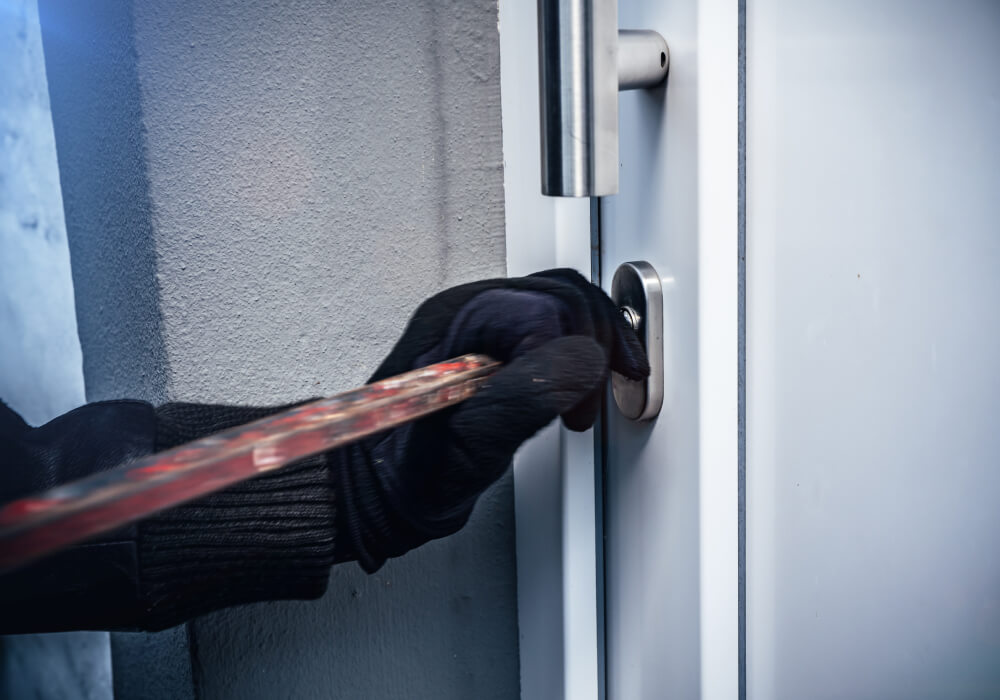
Which locks to rekey, replace or upgrade after a burglary
Not every lock in the house needs the same treatment. What each one needs depends on how the burglar got in and whether any keys are missing. Here is how to think through the next step:
- A house key is missing, or you cannot account for every spare: rekey every exterior door, so the old keys stop working and you keep your hardware.
- There is no sign of forced entry at all: treat it as if a key was used, rekey every exterior door, and think about who has had a key.
- The door was kicked in and the frame is split: repair the frame and fit a reinforced strike plate, and replace the deadbolt only if the bolt is bent or the lock no longer turns smoothly.
- The lock was pried, twisted or drilled: replace that lock, because a damaged cylinder cannot be trusted even if it still turns.
- The door had only a locking knob or lever: add a deadbolt, because a knob lock on its own does not resist force.
- The lock was old or a light builder-grade model: this is a sensible time to upgrade, because the door is already being worked on.
If you are unsure whether to rekey or change the locks, think of it this way. Rekeying deals with missing keys, and replacement deals with damage or weak hardware. If you do upgrade, a Grade 1 deadbolt is usually the right place to start when you compare the best locks to prevent home burglaries.
What to do if you have a smart lock or keypad lock
A smart lock or keypad lock needs a few extra checks, because a code or an app can give someone access in the same way a key can. Do these even if the lock looks undamaged:
- Change every code: delete all the existing codes and set new ones, including codes you gave to cleaners, guests or contractors.
- Check the list of users: remove anyone you do not recognize from the app, and remove any phone or tablet that was stolen.
- Change the account password: if a stolen phone or laptop was signed in to the lock's app, the account itself needs a new password.
- Look at the history: many smart locks keep a record of when the door was unlocked and by which code, and that record can help the police.
Other doors, keys and openers to check
The door that was forced gets all the attention, and the rest of the house is easy to forget. Walk through and check these as well:
- The other exterior doors: look for fresh marks around the locks, because a burglar often tries more than one door.
- The garage: a stolen garage remote can be cleared from the opener, and the door from the garage into the house should have its own deadbolt.
- Stolen car keys: a stolen spare can be erased from most modern cars so that it no longer starts the engine, and until that is done, park the car where it cannot be driven away easily.
- The alarm system: change the alarm code and tell your monitoring company what happened.
- Patio doors and windows: check that every latch still closes, and remember that a sliding glass door needs its own hardware.
Texas Premier Locksmith handles this work after a break-in. Our locksmith in Waco and crews in other Texas cities can repair the frame, replace or rekey the locks and reset the codes in one visit.
If you rent your home
Tell your landlord or property manager the same day, and give them the police report number. The door, frame and locks are usually part of the property, so the repair and any rekey are normally arranged through them. Ask when the work will be done, and ask for the locks to be rekeyed if a key is missing. Your own belongings are a separate matter, and renters insurance covers them if you have it.
What if it was only an attempted break-in?
An attempted break-in still deserves the same response. You may find pry marks on a door, a bent lock, a cracked frame or a torn window screen, with nothing missing inside.
Call the police and report it, and take photos before anything is fixed. Then have the damage repaired quickly. A lock or frame that held this time may still be weakened, and it may not hold the same way again. It is also worth telling your neighbors, because someone who failed at your house may try the next one.
Will a burglar come back after a break-in?
It is a fair worry. A second break-in is more likely when the first one leaves an easy way back in. That means a missing key, a door that was repaired poorly, or visible replacements for the things that were taken.
You lower the chance by closing those openings. Rekey if any key is unaccounted for, repair the door and frame properly, and do not leave the boxes from new electronics at the curb. Leave lights on a timer for a few weeks. Ask your neighbors whether their doorbell cameras recorded the street, and pass anything useful to the police.
It is also common to feel uneasy in your own home for a while. That usually eases once the house is repaired and the locks have been dealt with. Once the urgent repairs are handled, it is worth reviewing your front door security more carefully.
What to tell the locksmith when you call
A short description on the phone helps the technician bring the right parts. Before you call, look at the door again and have these answers ready, because they decide whether the job is a repair, a rekey or a replacement:
- Which door or window was used: say whether the frame is cracked and whether the door still closes.
- Whether any keys are missing: include spare keys, garage remotes and car keys.
- What kind of lock is on the door: a deadbolt, a keypad lock or a smart lock, and the brand if you can read it.
- Whether the police have finished: the visit can then be timed for after they leave.
Need your home secured after a break-in?
If your door, frame or locks were damaged in a burglary or an attempt, we can make the house lockable again. A technician repairs or replaces the damaged lock, checks the frame and strike plate, rekeys the other doors if any keys are missing, and resets keypad or smart lock codes. Take your photos first, then call (866) 948-8188 and tell us what was damaged.
Written By
TPL
Texas Premier Locksmith Team
Texas Licensed Locksmith — License #B17236
Residential, commercial and automotive locksmith services across Texas. Call (866) 948-8188.
Related Articles
Texas Premier Locksmith



Frequently Asked Questions

Do I have to wait for the police before I call a locksmith?
You can call a locksmith straight away to arrange the visit. The repair itself should wait until the police have finished and you have taken your photos, so that no evidence is lost.
Can a locksmith tell how the burglar got in?
Often, yes. A forced door leaves marks on the lock, the strike plate and the frame, and a locksmith can usually tell whether the door was kicked, pried or opened without force. That helps you decide whether to rekey.
How long should I keep the damaged lock and door parts?
Keep them until your insurance claim is settled. Your insurer or the police may ask to see them, and they support the photos you took. Put them in a bag with the date and the police report number.
Will my insurance pay for new locks after a burglary?
It depends on your policy. Many policies cover the repair of damage caused by the break-in, and some cover rekeying when keys are stolen. Ask your insurer before the work is done, and keep the receipt.